

Amsterdam Tech Jobs in 2026: The EMEA HQ Capital Playbook
Amsterdam hosts 25+ EMEA HQs of major US tech companies, where senior engineers earn €110K-€145K base. The 30% ruling, visa routes, and how to apply first.
 jobstrack.io
Stand at the corner of Gustav Mahlerplein in Amsterdam's Zuidas on a Wednesday morning and the geometry is unmistakable. The glass towers of ING, ABN AMRO, and PwC cluster along the southern ring road. Three minutes on foot: Booking.com's global campus, where over 6,000 engineers and product managers work on one of the world's most visited internet properties. Another five minutes: Adyen's European fintech headquarters, which processed over €1.2 trillion in payment volume in 2024. Across the city, TomTom's office quietly runs the mapping data that powers Apple Maps across Europe. At Schiphol, thirty minutes west, a direct flight leaves for San Francisco every day at noon.
Amsterdam is not trying to be the next Silicon Valley. It is something different, and by 2026, that difference has become a structural advantage no other European city fully replicates: it is the continent's default EMEA headquarters location. The hiring market that has grown around that concentration is one of the most English-friendly, professionally sophisticated, and financially interesting in Europe.
This is where Uber houses its European operations. Where Netflix installed its international content team. Where Elastic, Miro, Databricks EMEA, and dozens of other US-founded companies plant their European anchors. If you're targeting a European tech role, particularly at a US-founded company, the odds are better than even that Amsterdam is the market you're actually targeting, whether the job description says so clearly or not.
Here's what the 2026 Amsterdam tech job market actually looks like.
Key Takeaways
- The Netherlands employs over 300,000 ICT professionals; Amsterdam's metro area accounts for the largest concentration, and the country consistently ranks among Europe's top three tech talent markets (CBS / Statistics Netherlands, 2025)
- The Netherlands ranks 2nd globally for English proficiency among non-native speakers, with 97% of Dutch adults speaking conversational English (EF English Proficiency Index, 2025); Amsterdam's tech hiring is effectively an English-language market
- Senior software engineers earn €110,000–€145,000 base; the 30% facility can materially improve take-home pay for qualifying international hires (Government.nl, 2026)
- The EU AI Act's enforcement timelines (active from 2025) have created measurable demand for AI governance, compliance engineering, and model auditing roles across Amsterdam's financial and enterprise tech sector (European Commission, 2025)
- Roles posted on Amsterdam company career pages appear on LinkedIn and Indeed 24–72 hours later; applying within the first 24 hours yields 2–3x more interview responses than waiting for aggregators
How Large Is the Amsterdam Tech Job Market in 2026?
The Netherlands employs over 300,000 ICT professionals according to CBS / Statistics Netherlands data, with Amsterdam's metropolitan area (encompassing the city proper, Haarlem, Utrecht, and the broader Randstad corridor) accounting for the dominant share (CBS, 2025). The country consistently ranks in the top three European tech talent markets in CBRE's annual European analysis, citing the combination of university output, English proficiency, and transportation infrastructure as structural advantages that cities like Berlin or Madrid don't match simultaneously.
The venture capital environment has matured meaningfully. Dutch startups raised €4.2 billion in venture funding in 2025, with fintech and enterprise SaaS accounting for the largest share. Adyen's extended influence on the Amsterdam payments ecosystem has seeded over a dozen fintech companies in the past five years, many of which are now Series B or C employers (Dutch Startup Association / Dealroom, 2025). Mollie, Payvision, and Afterpay's Amsterdam operations represent the cluster effect at work. When the anchor tenant processes €1.2 trillion in annual payment volume, the surrounding talent pool, tooling, and investor appetite compound accordingly.
The Netherlands unemployment rate held at 3.7% through late 2025 (CBS, 2025), among the lowest in the EU. For tech candidates, the practical implication is negotiating power: qualified senior engineers and ML specialists face genuine competing-offer dynamics at the senior level in Amsterdam's fintech, AI governance, and cloud infrastructure domains.
The EMEA HQ Effect: Why Amsterdam Became Europe's Default Tech Capital
Most European tech market guides treat Amsterdam as a mid-sized regional player. That framing misses what has actually happened here over the past two decades. Amsterdam didn't accumulate EMEA headquarters through geographic chance. It accumulated them through a specific combination of structural advantages that no other European city replicates simultaneously.
English as the operating language. The Netherlands ranks second globally for English proficiency among non-native English-speaking countries per the EF EPI 2025 index: 97% of Dutch adults speak professional-level English. When a US company opens an EMEA office in Amsterdam, English-language hiring, English-language meetings, and English-language documentation are the default. This isn't the case in Paris, Berlin, or Milan, where local language fluency is often a practical requirement regardless of what the job posting says.
Schiphol as a connectivity hub. Amsterdam Airport Schiphol is Europe's third-busiest airport by passenger volume and a primary intercontinental hub. US companies headquartering their EMEA teams in Amsterdam are 8–11 hours from San Francisco and a 45-minute flight from London, Paris, Frankfurt, or Zurich. For product leads and engineering managers splitting time between the US and Europe, the logistics are genuinely better than they are from Berlin or Warsaw.
The 30% ruling and favorable holding structures. The Netherlands operates a Kennismigrant (Highly Skilled Migrant) visa programme that is among the most employer-friendly in the EU. The 30% facility can allow qualifying international employees to receive a tax-free allowance from their employer, with the highest benefit applying early in the five-year window for new users. For senior hires, this remains a meaningful recruiting advantage for Amsterdam employers competing with London and Zurich (Government.nl, 2026).
Innovation Box and IP-favorable tax structure. For companies holding IP in the Netherlands, the Innovation Box reduces corporate tax on qualifying IP profits to 9% versus the standard 25.8% rate. This is why Booking.com, Uber, Netflix, and dozens of other US technology companies maintain substantive Dutch legal entities rather than pure satellite offices. The EMEA headquarters carries real economic weight, which means the hiring at those offices carries real decision-making authority.
The practical consequence: Amsterdam EMEA roles frequently carry more responsibility than "regional satellite" suggests. When Netflix EMEA or Uber EMEA in Amsterdam makes a product or operations decision, it often has genuine authority over European outcomes, not just execution of San Francisco's strategy. That makes these roles more interesting than they appear on paper, and it makes Amsterdam a genuinely good market for people who want European scope without sacrificing career velocity.
Which Companies Are Actually Hiring in Amsterdam Tech?
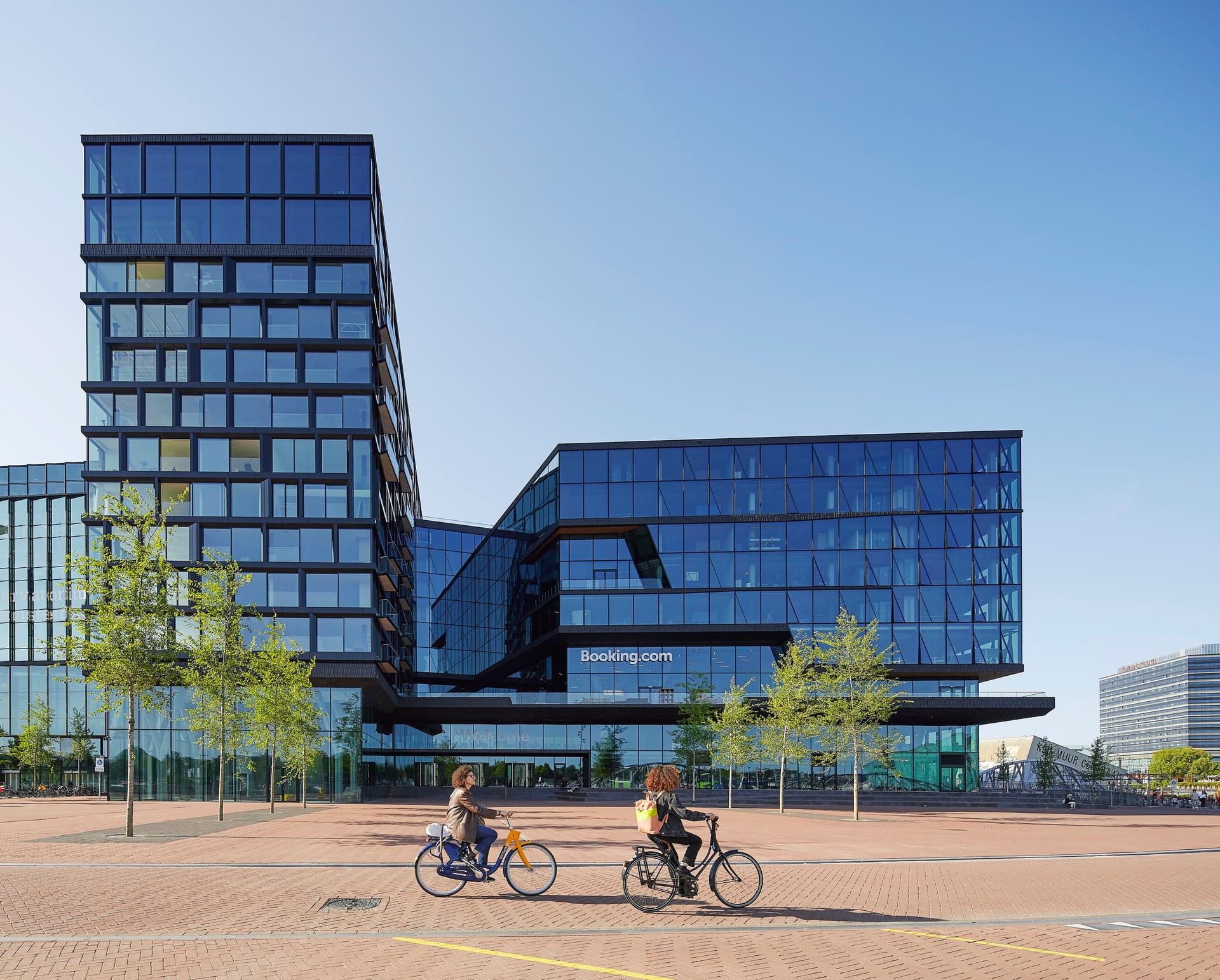
Amsterdam's employer base divides into four meaningful categories, each with different hiring dynamics.
The Amsterdam-Born Champions are the anchor employers. Booking.com (online travel, ~23,000 global employees, Amsterdam HQ) is the city's largest tech employer and one of the world's largest A/B testing operations, running over 1,000 simultaneous experiments at any given time. Adyen (payments infrastructure, ~4,500 employees globally) is the most influential fintech employer in Europe and one of the most technically demanding interviewers in the Amsterdam market. TomTom (maps and navigation data) employs thousands of engineers in Amsterdam building the data pipelines that underpin European location services for Apple Maps, automotive, and logistics clients.
The US Tech EMEA Headquarters form the second tier. Netflix EMEA (content localisation, licensing, and European originals) operates from central Amsterdam. Uber EMEA runs European operations, policy, and engineering localisation from the city. Elastic (Elasticsearch) maintains a significant Amsterdam engineering presence. Miro (collaborative whiteboard, ~2,500 employees globally) runs its European engineering team from Amsterdam. MessageBird / Bird (cloud communications) is Amsterdam-founded and one of the city's fastest-growing employer stories in recent years.
The Enterprise and Consulting Layer employs a large portion of the Amsterdam tech workforce in less visible but financially competitive roles. KPMG Tech and McKinsey Digital both run substantial Amsterdam practices focused on AI implementation, data strategy, and enterprise transformation for Dutch and European corporate clients. Philips (healthtech, imaging AI) employs hundreds of ML and software engineers working on regulated medical device software. WeTransfer (file sharing and creative tools) is Amsterdam-founded and anchors the city's creative tech segment.
The Scale-Up Cluster. Picnic (online grocery, Series F) is one of the fastest-growing technical employers in the Netherlands, building routing optimisation and logistics software at genuine scale. Catawiki (online auctions) runs a product and engineering team handling millions of auctions monthly. Takeaway.com / Just Eat runs its European engineering functions from Amsterdam. Mollie (payments, Series C+) is the fintech company most often cited as the "next Adyen" by Amsterdam investors.
The career pages worth monitoring directly, before aggregators index them:
| Company | Career Page |
|---|---|
| Booking.com | careers.booking.com |
| Adyen | careers.adyen.com |
| TomTom | tomtom.com/careers |
| Netflix EMEA | jobs.netflix.com → filter: Amsterdam |
| Miro | miro.com/careers |
| Elastic | jobs.elastic.co |
| Picnic | picnic.app/careers |
| Mollie | jobs.mollie.com |
| Philips | philips.com/a-w/careers |
| Catawiki | catawiki.com/careers |
What Can You Expect to Earn in Amsterdam Tech?
Senior software engineers in Amsterdam earn €110,000–€145,000 in base salary at the top-tier employers (Adyen, Booking.com, and the US tech EMEA offices), with total compensation including stock and bonuses reaching €150,000–€200,000 for senior and staff-level roles (Glassdoor Netherlands, April 2026). The 30% ruling applies on top of these figures for qualifying international hires, making the effective compensation substantially higher than base figures suggest.
The Adyen and Booking.com tier pays at the top of the Amsterdam market for software engineers, with total packages exceeding €200,000 at the senior engineer and principal level when stock appreciation and annual bonuses are included. The EMEA HQ tier (Netflix, Uber, Elastic, Miro) runs broadly in line with base figures, with meaningful equity upside in the pre-IPO names.
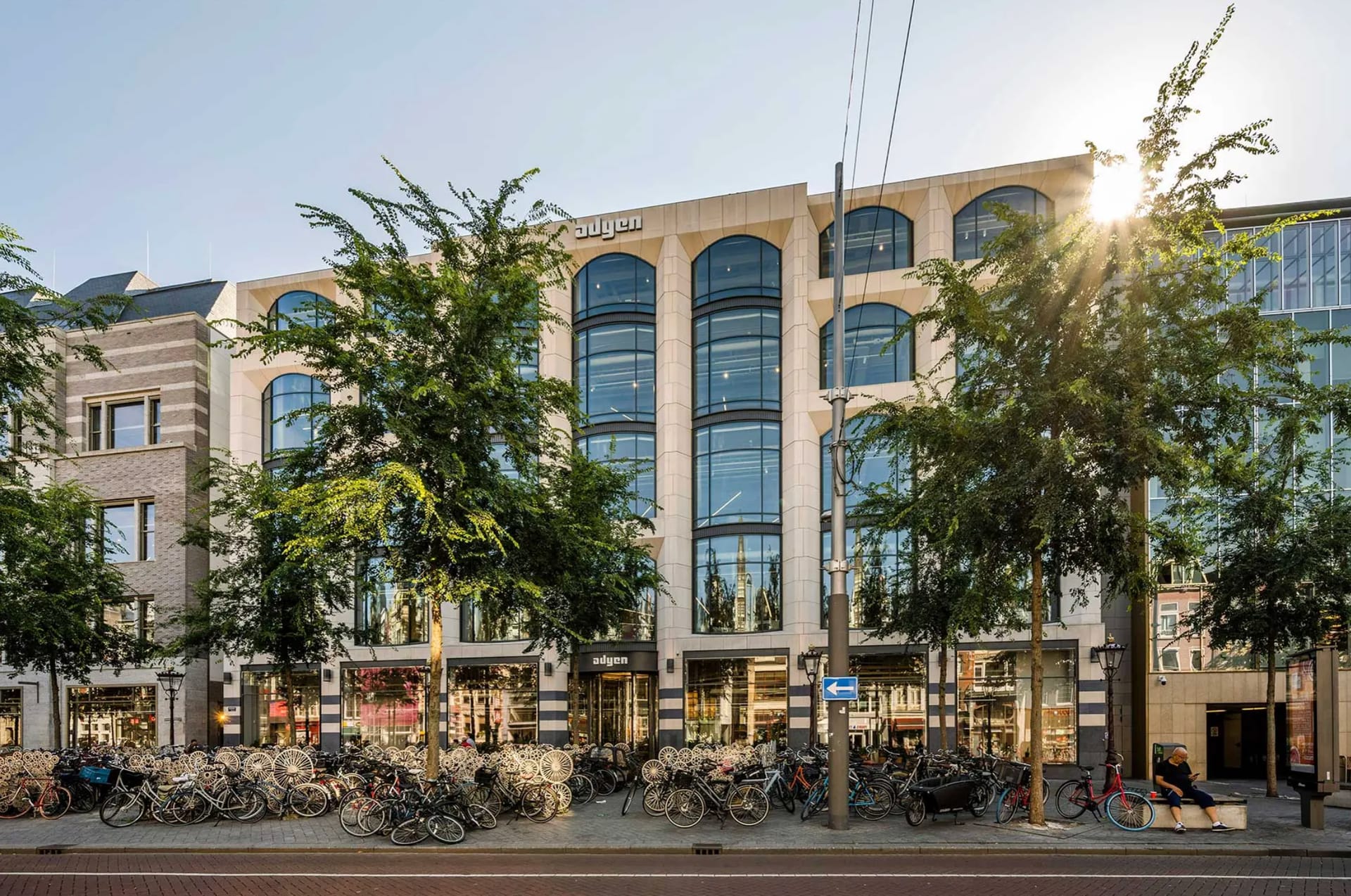
Scale-ups like Picnic and Mollie pay below the Adyen benchmark at the base salary level but offer equity in companies at inflection points. The enterprise and consulting tier (KPMG Tech, McKinsey Digital, Philips) typically runs €75,000–€110,000 at the mid-senior level, below pure-tech market rate but with stability, structured career progression, and genuinely complex problem exposure that many startups can't match.
Can You Afford Amsterdam on a Tech Salary?
Amsterdam is expensive by European standards but competitive against London, Zurich, and Paris on a cost-adjusted basis. The median rent for a one-bedroom apartment in Amsterdam's city centre reached €1,980 per month in early 2026, with outer-ring neighbourhoods and commuter cities like Haarlem and Utrecht running 20–35% lower (Pararius Rental Market Report, Q1 2026). Two-bedroom apartments in central Amsterdam average €2,600–€3,400 per month.
The practical math for a mid-level software engineer earning €87,000: after Dutch income tax (37.07% up to €73,031, 49.5% above), take-home without the 30% ruling is approximately €57,000–€62,000 annually. With the ruling applied, it rises to €66,000–€72,000. Rent at €1,980/month costs €23,760 per year, leaving €33,000–€48,000 depending on ruling eligibility. That's genuinely workable in a city of Amsterdam's quality, and at the senior level the arithmetic improves considerably.
The neighbourhoods that work best for Amsterdam tech workers: Westerpark and Bos en Lommer (15 minutes by bike from Zuidas, significantly lower rent than the centre), De Pijp (expensive but dense and central), and Amsterdam-Noord (across the IJ waterway by ferry, five minutes away, meaningfully cheaper and genuinely popular with tech workers). The commuter cities offer real value: a one-bedroom in Haarlem averages €1,450/month and is 20 minutes by train to Amsterdam Centraal. Utrecht is 30 minutes and runs €1,350/month for a central one-bedroom, popular with candidates who want more space without sacrificing employer access.
Amsterdam Science Park, on the eastern edge of the city, is worth knowing as a distinct submarket. It hosts CWI (the Dutch national research centre for mathematics and computer science), the University of Amsterdam's computer science faculties, and a growing cluster of deep tech and AI research companies. Candidates targeting research-adjacent roles at Dutch academia-industry crossover companies will find Science Park roles specifically worth monitoring.
Which Visa Routes Work for Non-EU Tech Workers in Amsterdam?
The Netherlands operates one of the most functional skilled-worker visa programmes in the EU. The Kennismigrant (Highly Skilled Migrant) permit is the primary route for non-EU tech workers. It has no annual quota, is handled through recognised sponsors, and carries transparent income thresholds. For 2026, IND lists €4,357 gross per month for highly skilled migrants younger than 30 and €5,942 gross per month for highly skilled migrants 30 or older (IND Netherlands, 2026; IND income requirements, 2026). Most Amsterdam tech salaries at the mid and senior level clear this threshold comfortably.
The EU Blue Card is an alternative with greater portability across EU member states for candidates who might subsequently relocate within Europe. The income threshold is slightly higher (1.5x the national average wage), but it grants more flexibility for subsequent moves to Germany, France, or other EU countries without restarting the residence process from scratch.
American citizens have a specific and underused route. The DAFT visa (Dutch-American Friendship Treaty) allows US citizens to establish as self-employed professionals or freelancers in the Netherlands with a streamlined permit process, without requiring employer sponsorship. For senior contractors, consultants, or engineers who prefer to structure their Amsterdam engagement independently, DAFT is a genuine option that most immigration attorneys in the city know well.
British citizens post-Brexit now require a Kennismigrant permit like any other non-EU national, removing the free movement advantage UK tech workers previously held. Amsterdam companies are experienced sponsors and the permit timeline remains manageable. British candidates should budget for the permit in offer negotiations. The 30% facility can apply to qualifying Kennismigrant holders who were recruited from outside the Netherlands and had not lived within 150 kilometres of the Dutch border in the preceding 24 months, making the effective Amsterdam package stronger than the base salary alone suggests.
Why the EU AI Act Is Creating a New Layer of Demand
Amsterdam's position as the EMEA headquarters city for dozens of US tech companies has made it the default implementation point for EU AI Act compliance across those companies' European operations. The Act's risk-based classification framework categorises AI systems into unacceptable risk, high risk, limited risk, and minimal risk tiers. High-risk AI deployments (credit scoring, CV screening, biometric identification, medical device AI) must undergo conformity assessments, maintain technical documentation, and implement human oversight mechanisms before deployment in the EU.
The enforcement timeline, with broad compliance obligations active from August 2025, has created measurable demand for roles that didn't exist at scale in Amsterdam three years ago: AI governance analysts, responsible AI engineers, compliance technology architects, and model auditing specialists. Companies like ING, ABN AMRO, and Booking.com use machine learning in high-risk or limited-risk categories across credit, fraud detection, and personalisation. These roles are being created faster than candidate pipelines are currently producing qualified applicants (European Commission AI Act Portal, 2025).
Deloitte's AI Act survey found that nearly half of surveyed German companies had not seriously engaged with implementation of the EU AI Act, while only about a quarter had started actively preparing for the new requirements (Tech Monitor reporting on Deloitte survey, 2024). For candidates with backgrounds in ML engineering, technical risk management, or regulatory affairs, this represents structural demand rather than a cyclical hiring wave. The Act doesn't go away, and the compliance engineering required to meet it scales with the number of AI systems deployed.
Salary benchmarks for these emerging roles in Amsterdam: AI governance analysts earn €75,000–€110,000 at the senior level; responsible AI engineers with combined ML and compliance backgrounds command €110,000–€145,000. The candidate pool is thin, which gives this specialisation a negotiating advantage that more commoditised software engineering roles don't have.
Why Does Timing Matter in Amsterdam's Competitive Market?
Amsterdam's tech market concentrates along specific corridors (Zuidas, the IJ waterfront, and Amsterdam Science Park) and in a limited number of anchor employers. Booking.com, Adyen, and the US EMEA cluster account for a significant share of senior tech hirings in any given quarter. When a relevant role opens at one of these companies, the candidate volume builds quickly, particularly for roles accessible to the broad European expat population that treats Amsterdam as a desirable relocation destination.
The aggregator lag problem is real here. When a company posts a role on its career page, it typically takes 24 to 72 hours for that posting to appear on LinkedIn, Indeed, or Glassdoor (LinkedIn Help Center, 2024). By then, Amsterdam hiring teams, which tend to run leaner than their US counterparts, may already be completing first screens. Research from GoApply (2024) found that candidates who apply within 24 hours of a posting see 2 to 3x more interview responses than those who apply on day four or later. Our first-mover advantage guide breaks down why this pattern is especially pronounced in concentrated EMEA markets. In Amsterdam, where the candidate pool is international and applications arrive from across Europe overnight, this timing edge compounds.

Jobstrack.io
Learn how to create job alerts for Amsterdam tech companies.
The career pages worth monitoring directly, before the aggregator queue builds:
- Booking.com: careers.booking.com
- Adyen: careers.adyen.com
- Mollie: jobs.mollie.com
- TomTom: tomtom.com/careers
- Picnic: picnic.app/careers
- Netflix: jobs.netflix.com → filter: Amsterdam
- Miro: miro.com/careers
- Elastic: jobs.elastic.co
- Philips: philips.com/a-w/careers

What Amsterdam Tech Actually Rewards in 2026
Amsterdam's hiring culture reflects specific values that distinguish it from London's financial-first culture or Berlin's startup-centric scene.
Data fluency over gut instinct. Booking.com runs more simultaneous A/B tests than most companies run in a year. Adyen makes architectural decisions based on transaction-level data. The hiring culture across Amsterdam's tech employer base rewards quantitative rigour: engineers and PMs who frame decisions in terms of metrics, confidence intervals, and experiment design are valued more highly than those reasoning from intuition or best-practice citation. Candidates who arrive at Amsterdam interviews with evidence of data-driven decision making have a meaningful signal advantage.
International experience as a baseline expectation. Amsterdam's tech teams are among the most internationally diverse in Europe. Booking.com alone employs people from over 70 nationalities. Having worked in multiple countries, navigated multi-cultural team dynamics, or shipped product for diverse international markets is not a differentiator in Amsterdam; it's a base-level expectation for senior roles. Candidates who treat their international background as a special selling point often underestimate how routine that profile is here.
Pragmatic over ideological approaches to AI safety. The EU AI Act has introduced a compliance-forward framing that Amsterdam's enterprise tech employers have absorbed. Engineers who understand how to implement human oversight mechanisms, maintain audit trails for model decisions, and classify AI systems under the Act's risk framework have a practical advantage that pure ML research backgrounds don't confer. Amsterdam is not a frontier AI research market like OpenAI's San Francisco operations. It's a production deployment market, and what it rewards is the ability to ship models that meet regulatory standards, not models that push SOTA benchmarks.
Work-life balance as a structural value, not a line in a job posting. Dutch working culture genuinely values the work-life boundary in a way that San Francisco's startup culture does not. Forty-hour weeks are the norm at most Amsterdam employers. Parental leave is substantial. The cycling infrastructure means a 15-minute commute from a genuinely liveable neighbourhood is achievable at most Zuidas employers. These aren't perks. They're structural features of the Amsterdam labour market that persist through business cycles.
Frequently Asked Questions About the Amsterdam Tech Job Market
What makes Amsterdam different from other European tech hubs like Berlin or Dublin?
Amsterdam's unique position as the EU's default EMEA headquarters city concentrates US tech company decision-making authority in a single metro. Berlin carries language friction for English-first operations. Dublin has a smaller talent pool. Paris combines higher housing costs with language complexity. Amsterdam pairs near-universal English proficiency, Schiphol hub connectivity, the 30% ruling tax benefit for international hires, and a mature fintech and enterprise tech ecosystem. Salaries are competitive against any European market outside London and Zurich.
How does the 30% ruling work and who qualifies?
The 30% facility allows qualifying international employees to receive a tax-free allowance from their employer. To qualify, you must generally be recruited from outside the Netherlands and meet the Dutch tax authority's conditions, including distance and salary requirements. Government.nl describes the current facility as a phased benefit over a five-year period for new users, with the employer arranging the tax exemption through the Tax Administration (Government.nl, 2026).
What is the hiring process like at Booking.com and Adyen?
Booking.com runs one of the most structured interview processes in European tech: expect a data case round, a product sense interview, and a technical round that specifically tests experimentation methodology. Adyen's process emphasises systems design and payment domain knowledge at the senior level. Both companies conduct interviews in English. Hiring timelines typically run four to six weeks for senior roles. Both are experienced at sponsoring Kennismigrant permits.
Is Amsterdam a good market for non-EU candidates without existing EU rights?
Yes. The Netherlands' Kennismigrant programme is among the most employer-friendly in the EU. Major Amsterdam employers (Booking.com, Adyen, TomTom, Philips) are certified IND sponsors with established permit pipelines. The income threshold for tech roles is easily met at the mid and senior level, and permit processing typically takes two to four weeks. The 30% ruling applies to most Kennismigrant holders, making the effective compensation package substantially better than the base salary figure suggests.
How do I find Amsterdam tech jobs before they appear on LinkedIn or Indeed?
Roles appear on company career pages 24–72 hours before LinkedIn, Indeed, or Glassdoor index them (LinkedIn Help Center, 2024). Candidates who apply within 24 hours of a posting see 2 to 3x more interview responses than those who apply after the aggregator queues build (GoApply, 2024). Setting up real-time monitoring for Booking.com, Adyen, Mollie, and other Amsterdam career pages, or using jobstrack.io to track them automatically, is the most reliable way to reach application queues before they saturate. Our first-mover advantage guide covers the full timing data.
What Amsterdam Actually Delivers
People come to Amsterdam tech for specific reasons. Not the equity trajectory of a San Francisco AI unicorn. Not London's financial services scale. Something that looks quieter from the outside but compounds differently. The operational authority of running a continent's worth of product for one of the world's most visited platforms. The financial sophistication of an industry that processes trillions in annual payment volume. And the structural quality of life that comes from a city built for humans rather than automobiles.
The 30% ruling is worth more than most candidates realise until they model it out. The Kennismigrant permit is faster and less stressful than the H-1B lottery. The commute from Haarlem to Zuidas is 22 minutes by train. The team at the desk next to you is from Brazil, South Korea, India, and Ireland simultaneously, and everyone is speaking English. That's just how Amsterdam works.
In 2026, that combination is the most underrated value proposition in European tech: technical ambition, regulatory sophistication, international talent density, and a functional quality of life.
For other European tech markets covered in depth, see our London tech job guide and Berlin tech job guide.
References
Amsterdam Tech Market and Employment
- CBS / Statistics Netherlands: ICT employment: Official Dutch statistics bureau data on ICT professionals in the Netherlands; source for the 300,000+ figure.
- CBS: Netherlands unemployment rate: Official unemployment statistics; source for the 3.7% figure (late 2025).
- Dutch Startup Association / Dealroom: Netherlands VC Report 2025: Source for the €4.2 billion in Dutch startup venture funding in 2025 and fintech deal activity.
- Amsterdam Economic Board: Amsterdam Economic Board market data and sector analysis.
Salaries and Compensation
- Glassdoor Netherlands: Software Engineer Salaries, Amsterdam: Employer-reported salary data for Amsterdam software engineers (April 2026).
- Levels.fyi Amsterdam: Software Engineer Compensation: Crowd-sourced total compensation data for Amsterdam software engineering roles (2026).
Housing and Cost of Living
- Pararius Rental Market Report Q1 2026: Amsterdam and Netherlands rental market data; source for the €1,980/month one-bedroom median.
- Numbeo: Amsterdam Cost of Living: Crowdsourced cost of living data for Amsterdam compared to other European tech cities.
Visa and Immigration
- IND Netherlands: Highly Skilled Migrant permit: Official Dutch Immigration Service guidance on the Kennismigrant permit and process (2026).
- IND Netherlands: Required income amounts: Official 2026 income thresholds for highly skilled migrants, EU Blue Card applicants, and other residence permit categories.
- Government.nl: 30% Facility: Official Dutch government guidance on the 30% facility, eligibility framing, duration, and scale-back rules.
- IND Netherlands: Residence permit self-employed person: Official IND guidance for self-employed applicants, including Dutch-American Friendship Treaty (DAFT) requirements for US citizens.
EU AI Act
- European Commission: EU AI Act Portal: Official EU regulatory framework documentation; source for risk-classification framework and enforcement timelines.
- Tech Monitor: Deloitte EU AI Act survey coverage: Coverage of Deloitte survey findings on EU AI Act readiness among German companies.
English Proficiency
- EF English Proficiency Index 2025: Netherlands ranked 2nd globally for English proficiency; source for the 97% figure.
Tools Mentioned
- jobstrack.io: Real-time career page monitoring for Amsterdam tech companies, apply within minutes of a posting going live.
- First-Mover Advantage in Tech Hiring: Analysis of how early application timing affects interview response rates at companies like Booking.com and Adyen.
Image Credits
- Booking.com campus image: CBRE case study, "The Booking.com premises: a home for everyone". CBRE lists photography by Stijn Poelstra and Matthijs van Roon.
- Adyen headquarters image: CBRE case study, "Zurich Gruppe Deutschland transforms a department store into the workplace of the future".
- Amsterdam Centraal waterfront image: Photo by Vish Pix from Pexels.
- Amsterdam cycling commute image: Photo by Viridiana Rivera from Pexels.
- Amsterdam canal ferry image: Photo by Eduardo González from Pexels.
More Articles
Dallas-Fort Worth Tech Jobs 2026: Fortune 500 Engineering Hub
DFW added 37,230 tech jobs since 2022 and ranks eighth in CBRE's 2026 scorecard. Explore employers, salaries, living costs, and H-1B patterns.
Aug 27, 2026
Paris Tech Jobs 2026: The AI Capital Hiring Playbook
Paris hosts Mistral, Anthropic, Meta FAIR, and a €93B Choose France 2026 commitment. This guide covers AI hiring, salaries, visas, and how to apply first.
Jul 26, 2026
Austin Tech Jobs 2026: The Invisible Market Playbook
Austin added 8,300 net new tech jobs in 2026. Most candidates can't see them. Here's the Invisible Market playbook for Silicon, AI infra, and speed.
May 29, 2026