

Built for the City: How to Get a Job at Uber in 2026
Uber's 2026 hiring guide: business units, interview loop, SWE compensation, behavioral norms, AI hiring shifts, and how to apply before the queue fills.
 jobstrack.io
Why This Guide Is Different Most Uber hiring guides treat Uber like one company. It hasn't been one company for years. Uber now runs five distinct businesses (Mobility, Delivery, Freight, Ads, and Autonomous Solutions) with materially different hiring postures, compensation bands, and interview emphases. This guide breaks them down individually, plus covers the timing advantage that compounds at a high-volume employer like Uber.
TL;DR: The 2026 Uber Hiring Strategy
- Apply within 24 to 48 hours of a posting going live: Uber's career page typically draws 200+ applicants in week one, and the early cohort gets careful review
- Uber's BUs are not interchangeable: pick one of Mobility, Eats, Freight, Ads, or Autonomous Solutions and tailor your application to it
- SWE median total comp ranges from $204K (SWE I) to $803K (Senior Staff) (Levels.fyi, May 2026)
- Behavioral rounds explicitly probe Uber's stated values; prep STAR stories mapped to each
Part I: What Uber Actually Is in 2026
Uber posted $193 billion in 2025 gross bookings, marking its fifth consecutive year of 20%+ growth (Uber Q4 2025 earnings). That growth no longer comes from a single product. Uber today is a portfolio of five distinct businesses, each with its own hiring posture and technical culture.
The Five Business Units
Mobility is the original Uber: ride-hailing across more than 70 countries. It still drives roughly 60% of total revenue and remains the most mature segment. Hiring here favors engineers with deep marketplace and distributed systems experience.
Delivery wraps Uber Eats, grocery, and retail under one umbrella. It's the strongest growth surface inside the core business, with new partnerships across OpenTable, Shopify, Loblaws Canada, Biedronka Poland, Seiyu Japan, and Coles Australia.
Freight is Uber's B2B logistics arm. It just hit breakeven Adjusted EBITDA in Q4 2025 for the first time in three years and is rebuilding selectively.
Uber Ads crossed a $1.5 billion annual revenue run rate (Intellectia, May 2025). High margin, fast hiring, and unusually open to ML engineers and PMs from outside ad-tech.
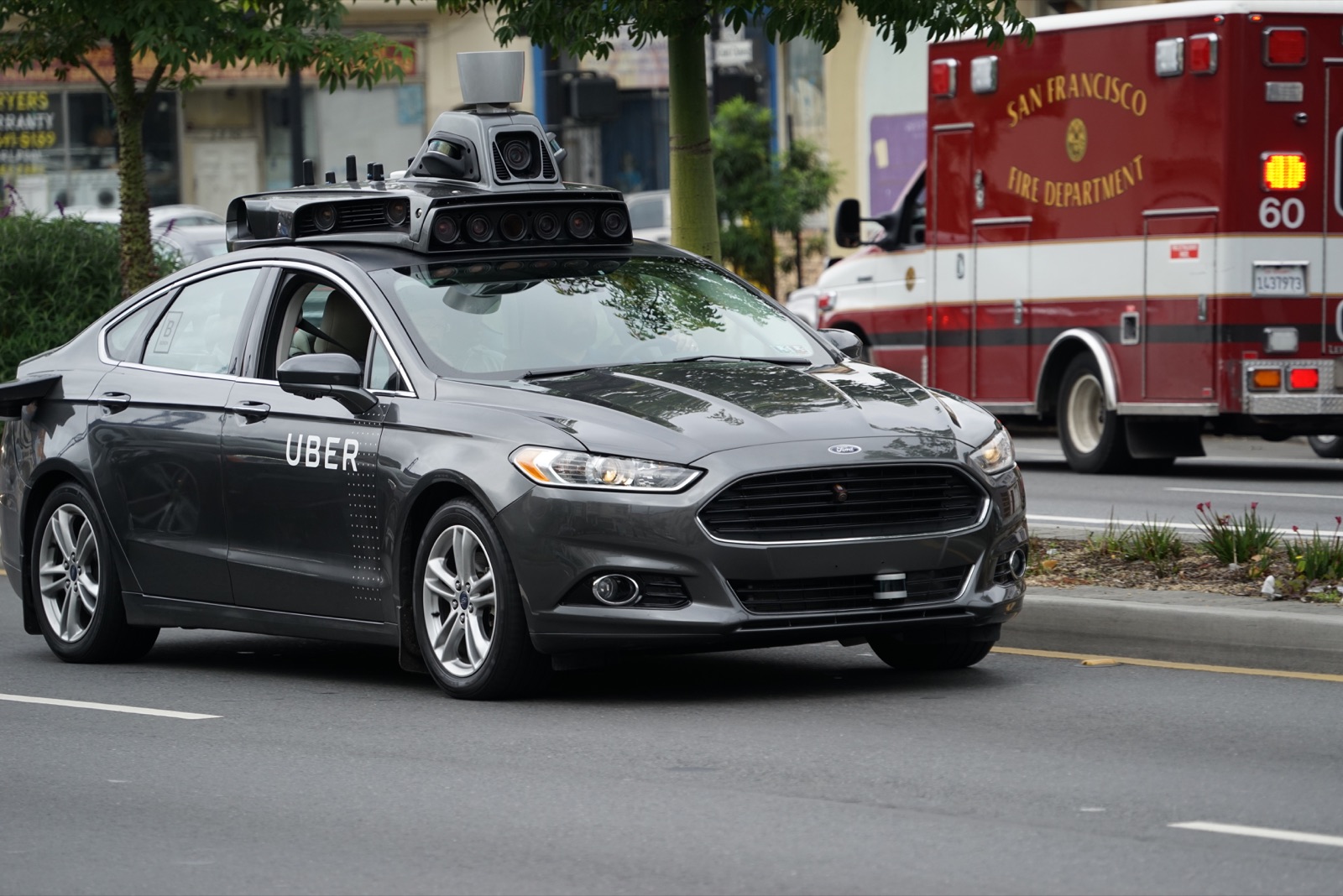
Uber Autonomous Solutions received a $10 billion strategic investment in April 2026 and has a stated 50,000 robotaxi target by 2028 across 28 cities, powered by partnerships with Rivian, Baidu, and Lucid.
Headcount and Engineering Footprint
Uber employs roughly 31,100 people globally as of April 2026 (Unify), with engineering accounting for about 15%, or roughly 4,665 engineers. The biggest hubs are San Francisco, Seattle, New York, Bengaluru, Hyderabad, and Amsterdam.
Dara Khosrowshahi's strategic reset since 2017 has reshaped Uber from a culture defined by the Kalanick era into a disciplined, multi-business operator. That cultural shift matters for your interview prep, because the behavioral bar today is closer to a public-company operating culture than the early move-fast Uber.
Part II: Why Should You Apply Early at Uber?
Uber posts roles continuously on its career page, but LinkedIn lags 18 to 48 hours behind (LinkedIn job posting delay analysis). High-volume SWE roles in the SF Bay Area typically accumulate 200+ applicants within their first week. The early cohort is where careful review happens. After that, recruiter attention spreads thin and the funnel narrows.
Based on jobstrack.io monitoring of Uber's career page across Q1 and Q2 2026, SF-based Senior SWE roles tend to accumulate 50 to 100 applicants within the first 24 hours and 200+ by day seven. Roles outside the Bay Area, particularly in Bengaluru and Amsterdam, accumulate at roughly half that rate, but recruiter capacity is also lower.
What does this mean in practice? You're not competing for attention against everyone. You're competing against the first 50 to 100 applicants. Glassdoor data on Uber interview cycles shows an average 24-day end-to-end hiring timeline across 4,280 reported interviews (Glassdoor). That means by the time a role has been live for two weeks, candidates from the first cohort are already in onsite rounds.
The structural fix is simple: monitor Uber's career page directly, not LinkedIn. You can do this manually, or you can use an automated alert system. For the full system, see our guide to monitoring company career pages without checking daily and the broader first-mover advantage playbook.

jobstrack.io
Learn how to create job alerts for high-volume employers like Uber.
Part III: Which Uber Business Unit Should You Target?
Uber Ads crossed a $1.5 billion annual revenue run rate in 2025 (Intellectia) while Uber Autonomous Solutions received a $10 billion strategic investment in April 2026 (Uber Q4 2025 earnings). Uber's five BUs differ materially in growth rate, hiring posture, and interview emphasis. The single biggest leverage move most candidates miss is treating Uber like one company. It isn't. A senior backend engineer who applies to "Uber" gets ranked against a generic pool. The same engineer who applies to "Uber Eats Restaurant Platform" with a tailored resume gets read carefully.
BU-strategic application is the highest-leverage choice in the entire Uber funnel. It costs you nothing in time, requires no extra prep beyond reading one engineering blog post, and meaningfully changes how recruiters route your file.
So which BU should you target? The answer depends on your background and which kinds of problems energize you. Here's what each one looks like in 2026.
Mobility
Mature segment. Roughly 60% of total bookings. Hiring is steady rather than explosive, and interviews lean heavily on distributed systems and marketplace fundamentals. If you've built dispatch systems, real-time matching engines, or pricing infrastructure, this is the natural fit. Behavioral rounds here probe operational rigor, because Mobility runs in 70+ countries with 70+ regulatory contexts.
Delivery (Uber Eats)
Strong growth, active international expansion, and the deepest current investment in ranking ML and restaurant platform work. The 2026 partnership wave (OpenTable, Shopify, Loblaws, Biedronka, Seiyu, Coles) is creating genuine headcount need on integration, ranking, and merchant-facing teams. If you've worked on marketplace search, recommendation, or B2B SaaS integrations, this is the warmest surface.
Freight
Selective. Freight hit breakeven Adjusted EBITDA in Q4 2025 for the first time in three years. That signals a careful rebuilding posture, not aggressive growth hiring. Candidates with B2B logistics, supply chain, or carrier-network experience are valued disproportionately because the domain is specialized.
Ads
Hot. Ads is at $1.5 billion in annual revenue run rate and growing at high margin. The team is hiring ML engineers, data scientists, and product managers from outside ad-tech, which is unusual in the space. If you have any experience in ranking, auction design, or measurement, the BU-fit story writes itself.
Uber Autonomous Solutions
Highest compensation premiums and the most aggressive hiring inside Uber. The $10 billion April 2026 investment and 50K robotaxi target by 2028 require perception ML, planning, simulation, and fleet operations talent at scale. Roles here are competitive, but the bar is more about specialization depth than generalist breadth.
Part IV: How Does the Uber Interview Process Work?
Uber's interview process spans 5 to 6 stages over 2 to 6 weeks, with an average 24-day end-to-end timeline across 4,280 reported interviews (Glassdoor). Glassdoor's difficulty rating sits at 3.2/5 for SWE I and 3.3/5 for Senior SWE, with positive candidate experience reported by 43% to 48% of interviewees. The bar is high but the process is structured and well-documented.
Stage 1: Recruiter Screen (30 minutes)
A logistical and motivation screen. Expect questions about your background, your interest in a specific BU (this is where the BU-targeting work pays off), timeline, and compensation expectations. Come with a specific answer for which Uber product surface you want to work on and why.
Stage 2: Online Assessment (CodeSignal, 70 to 90 minutes)
For most engineering roles. Four algorithmic problems on CodeSignal, scored on correctness, time, and code quality (Interview Query). Don't optimize for the perfect solution on every problem. Solve three cleanly and partial-credit the fourth. The scoring rewards reliability.
Stage 3: Technical Phone Screen (45 to 60 minutes)
A single problem, deeper than the OA. Typically a graph, tree, or sliding-window problem with Uber-domain flavoring: k-nearest drivers, dispatch routing, or grid-based ride coverage. Talk through your approach before coding. Interviewers note candidates who debug aloud and ask clarifying questions.
Stage 4: Virtual Onsite Loop (4 to 6 rounds, 60 minutes each)
Typically scheduled across two days. The composition varies by level and BU, but the standard pattern is:
Coding rounds (2 rounds). Graphs, trees, heaps, sliding window, often Uber-domain flavored. Expect at least one problem framed around dispatch, routing, or matching. Brute force first, then optimize. Stating constraints clearly is rewarded.
System design (1 to 2 rounds for mid and senior levels). Real Uber problems: ride-matching engines, real-time location tracking, surge pricing, dispatch services, restaurant search ranking, or fraud detection at scale. Distributed systems depth and the ability to articulate consistency tradeoffs are what's being evaluated (Exponent).
Behavioral / collaboration (1 round, usually with hiring manager). Mapped to Uber's published cultural norms. We'll cover this in detail in Part VI.
So how is the final decision actually made? Not by your last interviewer. Uber uses a hiring committee model that calibrates across the full loop.
Stage 5: Hiring Committee Review
Final calibration. The committee reviews the full interview record, normalizes scores across interviewers, and makes the offer decision. Turnaround from end of onsite to verbal offer is typically 5 to 10 business days (TechPrep).
Part V: How Does Uber Compensation Actually Work?
SWE total compensation at Uber ranges from $194K to $1.58 million+, with a median of $407K across all levels (Levels.fyi, data as of May 15, 2026). Compensation is competitive with Google and Meta mid-levels but slightly lower than Stripe and Anthropic at equivalent levels. The gap closes at Staff and above, where Uber's equity refresh grants run more aggressive than most public-company peers.
Geographic and Equity Details
San Francisco Bay Area median sits at $490K, the highest US band. Uber is publicly traded (NYSE: UBER), so RSUs vest on a standard four-year schedule with a one-year cliff and are immediately liquid on vest. This is a meaningful difference from private peers like Stripe or Anthropic, where liquidity depends on company events. See our Stripe hiring guide for the contrast.
Refresh grants are common for retention at Senior and above. Sign-on bonuses are used to close competing offers and are one of the most flexible parts of the package. If you have a competing offer from a public-company peer, share the specifics with your recruiter. Uber's offers typically move on equity grant size and sign-on, not base salary.
Compensation vs. Peers
So is Uber the right move for you compared to FAANG or top private companies? It depends entirely on level. Median Uber TC is competitive with Google and Meta mid-levels and trails Stripe and Anthropic at Senior and below. At Staff and above, refresh grant policy closes the gap. The right framing: if you're early in your career, the FAANG peers may still pay more in cash and equity; if you're Staff+, Uber's offers are genuinely competitive at the top of the market.
Part VI: How Do You Pass Uber's Behavioral Interviews?
Uber's onsite includes 1 to 2 behavioral rounds out of 4 to 6 total (Interview Query; Exponent), and they explicitly evaluate candidates against Uber's published cultural norms. These rounds are not culture-fit small talk. Interviewers map candidate stories to specific norms and score them.
The 8 Cultural Norms
Uber's current cultural norms replaced the original 14 Kalanick-era values during Dara Khosrowshahi's reset. The eight norms now in use anchor every behavioral round. The most commonly probed:
- "We're all in": ownership and follow-through on hard problems
- "Outstanding execution": ship something, then ship it again better
- "Trip obsessed": customer focus, with specificity about who the customer is for your role
- "Go get it": bias to action under ambiguity
- "Stand for safety": real example, real stakes; this norm carries weight in any Mobility or AV role
How to Prep
Map 6 to 8 STAR-format stories to specific norms. Each story should include a real decision you made, the trade-off you weighed, the action you took, and a measurable result. Interviewers probe for specificity, so rehearsed narratives that gloss over the messy middle rarely survive follow-up questions.
Common Failure Modes
Three patterns sink otherwise-strong candidates. First, defensive answers about past conflicts: interviewers want to see how you actually engaged, not how you avoided the conflict. Second, generic stories that don't ground in Uber-specific context: tie at least one story to a problem the BU you're targeting actually faces. Third, claiming "ownership" without demonstrating decision authority: the question behind every ownership story is "what did you decide, and what was at stake if you were wrong?"
Part VII: How Is AI Reshaping Hiring at Uber?
10% of Uber's code updates now come from autonomous coding agents, per Dara Khosrowshahi's Q4 2025 prepared remarks (Uber). That shift is already reshaping what Uber hires for. The bar is moving from implementation speed toward design judgment, system thinking, and review quality.
What does this mean for candidates? Engineering hiring growth across core Uber has slowed because AI productivity gains absorb some headcount need. Uber is still hiring, but the composition of roles is shifting. Junior implementation roles are fewer; senior roles emphasizing architectural judgment, code review, and AI tooling integration are growing.
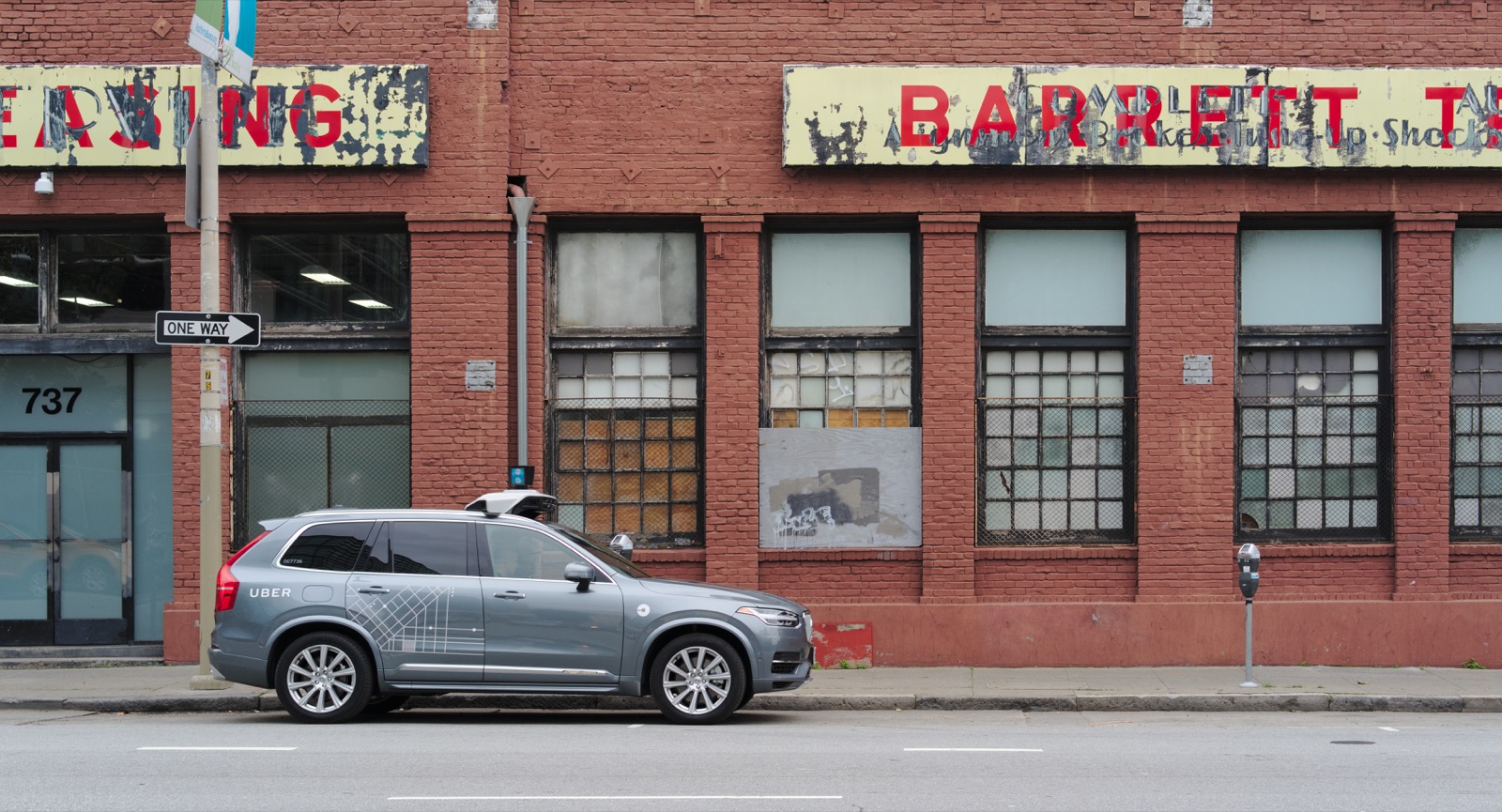
The counterbalance is Uber Autonomous Solutions. The 50,000 robotaxi rollout target by 2028 requires perception, planning, simulation, and fleet operations ML specialists at a scale Uber hasn't hired for before. If you have any background in robotics, computer vision, or large-scale ML simulation, the AV team is the highest-growth surface in the company today.
But where is the geographic hiring growth actually happening? Not just in San Francisco.
India Expansion
Uber is opening two major campus expansions in Bengaluru and Hyderabad by 2027, adding roughly 9,600 seats (TechCrunch, May 2026). Current India headcount sits around 3,500 employees. That's a near-tripling. For candidates based in India, or willing to relocate, the next 18 months are an unusual hiring window. Roles will span product, engineering, operations, and data science.
The opportunity isn't just volume. Bengaluru and Hyderabad teams are taking ownership of full product surfaces, not just supporting US-based teams. For a senior engineer, India-based roles increasingly carry the same scope as Bay Area roles at lower total comp but better cost-of-living math.
Part VIII: A Real-World Uber Application Walkthrough
Consider "Priya," a mid-level backend SWE at a US grocery-tech startup, targeting the Uber Eats Restaurant Platform team in early 2026. Her path illustrates how BU-specific targeting, early application, and engineering-blog research compound into a top-of-band offer.
-
Week 1.
A jobstrack.io alert fires on a Tuesday morning at 9:14 AM for a Senior SWE role on the Eats Restaurant Platform team. Priya applies through Uber's career page directly (not LinkedIn Easy Apply) four hours later, tailoring her resume to highlight ranking and marketplace work.
-
Week 2.
Recruiter screen on Thursday. Priya references a specific 2025 Uber engineering blog post on restaurant ranking and ties it directly to a ranking redesign she led at her current company. The recruiter notes the specificity and moves her to the technical phone screen the following Monday.
-
Week 3.
Online assessment on CodeSignal: three problems cleanly, partial on the fourth. Technical phone screen on a graph problem the next day. She talks through her approach for the first six minutes before writing any code.
-
Week 4.
Virtual onsite loop over two days. The system design round prompt: "design Uber Eats restaurant search ranking." Priya doesn't jump into architecture. She spends the first eight minutes asking about ranking goals (relevance, delivery time, partner economics), traffic profile, and consistency requirements. The interviewer notes that this is what they're scoring for.
-
Week 5.
Offer at L5A with total compensation at the top of the band. Sign-on bonus added to close a competing public-company offer.
What Actually Mattered
Five things mattered most:
-
BU specificity.
Priya targeted Eats Restaurant Platform, not generic Uber.
-
Early application timing.
She applied through the career page within hours of the posting going live.
-
Product-specific research.
She read at least one Uber engineering blog post before the recruiter call and used it naturally.
-
System design discipline.
She asked about constraints before proposing architecture.
-
Behavioral specificity.
She told honest STAR stories with real trade-offs, not polished but generic narratives.
None of these are tricks. They're the same things every Uber hiring manager will tell you matter, but most candidates skip them under interview pressure. See our tech job search playbook for the broader framework and how to humanize your job applications for the application-level details.
Part IX: What Should You Do If Uber Rejects You?
A rejection from Uber doesn't close the door. Based on Uber recruiter feedback patterns reported across Glassdoor's 4,280 interview records, a 6 to 12 month cooldown is standard before reapplying to the same team. But here's the structural advantage candidates underuse: BU mobility. A rejection from Mobility doesn't block applying to Eats, Ads, or Autonomous Solutions soon after, because hiring decisions are made at the team and BU level, not corporate.
Three things to do immediately:
-
Ask for directional feedback.
Recruiters won't share the full evaluation, but they can usually indicate which gap mattered: technical, behavioral, or BU fit. That information shapes your next attempt.
-
Pick a different BU if the gap was technical fit.
If your background didn't match Mobility's marketplace depth, you might be a stronger match for Ads or Eats. The BU framework in Part III is the map.
-
Keep monitoring the career page.
Uber posts roles continuously, and many open and fill within the same two-week window. See our first-mover advantage guide and how to monitor company career pages for the system.
Not every Uber posting reflects real headcount, either. Some are perpetual-pipeline roles. Our ghost jobs guide covers how to spot the difference. Don't let rejection define your next move. Let it inform your targeting.
Frequently Asked Questions
How long does Uber take to hire?
Average 24 days from first screen to offer across all roles (Glassdoor, n=4,280 interviews). Senior and Staff roles can run 4 to 6 weeks; entry-level and intern processes often complete in 2 to 3 weeks. BU-specific urgency can compress the timeline significantly.
How hard is it to get a job at Uber?
Glassdoor rates interview difficulty 3.2/5 for SWE I and 3.3/5 for Senior SWE, with positive experience ratings around 43% to 48%. The bar is high but the process is structured and well-documented, so preparation translates directly to outcomes. BU-specific preparation is the single highest-leverage step.
What is Uber's system design interview like?
Domain-flavored: ride-matching engines, real-time location tracking, surge pricing, dispatch services, and restaurant search ranking. Distributed systems depth and consistency trade-offs are the recurring themes. Mid-level and senior roles typically face 1 to 2 system design rounds in the onsite, scored on clarity of trade-off articulation.
Does Uber hire remote engineers?
Limited. Most engineering roles are anchored to specific hubs (San Francisco, Seattle, New York, Bengaluru, Hyderabad, Amsterdam). Hybrid 3-day office is standard for US-based engineering roles, with full remote rare and typically reserved for specific Staff+ roles. The new India campuses will expand hub-based hiring substantially through 2027.
How does Uber compensation compare to FAANG?
Median SWE total compensation at Uber ($407K) is competitive with Google and Meta mid-levels but slightly lower than Stripe and Anthropic (Levels.fyi, May 2026). The gap closes at Staff+ where equity refresh grants run more aggressive. Public-company liquidity is also a meaningful differentiator versus private peers.
jobstrack.io
Track Uber career page openings the moment they go live.
References
Uber Official Resources
- Uber Careers: primary source for open roles; check directly rather than via aggregators
- Uber Investor Relations: quarterly earnings, strategic announcements, BU performance data
- Uber Engineering Blog: real infrastructure posts; reading these signals genuine product interest
Interview Preparation
- Levels.fyi: Uber Salaries: community-sourced compensation data by level and role (data updated May 15, 2026)
- Glassdoor: Uber Interview Reviews: n=4,280 interview reports
- Interview Query: Uber SWE Guide: coding question patterns and onsite structure
- Exponent: Uber SWE Interview Guide: system design and behavioral prep
- TechPrep: Uber Interview Process: end-to-end timeline and stage-by-stage breakdown
Context and Background
- Uber Q4 2025 Earnings Release: $193B 2025 gross bookings, BU-level performance, AV strategy
- Dara Khosrowshahi Q4 2025 prepared remarks: AV investment, 10% AI code generation, India expansion
- TechCrunch: Uber to open 2 India campuses: 9,600-seat expansion in Bengaluru and Hyderabad by 2027
- Intellectia: Uber Ads $1.5B run rate: Uber Ads revenue and margin context
- Unify: Uber Headcount: global headcount, ~31,100 employees as of April 2026
- The First-Mover Advantage: Applying Early to Tech Jobs: why applying within 24 to 48 hours matters at high-volume employers like Uber
- San Francisco Bay Area Tech Job Scene 2026: regional context for Uber's largest engineering hub
- Instant Job Alerts in 2026: the alerting system that surfaces Uber roles in the first-mover window
Image Credits
- Self-driving Uber prototype photo via Wikimedia Commons
- Mission Bay office photo via Wikimedia Commons
- Uber self-driving Volvo photo via Wikimedia Commons
- Uber World Headquarters office photo via Office Snapshots
More Articles
Your Next Role at AMD: A 2026 Guide to Teams, Pay, and Applications
Explore AMD engineering teams, software engineer compensation, software and hardware interviews, office locations, and how to prepare your application.
Sep 21, 2026
How to Get a Job at Figma in 2026: Salary, Interview Process, and Teams to Target
Figma's Q2 2026 revenue grew 48% as AI adoption accelerated. Learn which teams to target, compensation by level, and how its interview loop works.
Aug 21, 2026
How to Get a Job at Salesforce in 2026: Salary, Agentforce, and the Trailhead Path
Salesforce hiring in 2026: software engineer compensation, Agentforce and Data Cloud roles, the interview loop, Trailhead certifications, referrals, and how to apply early.
Jul 31, 2026