

Your Next Role at AMD: A 2026 Guide to Teams, Pay, and Applications
Explore AMD engineering teams, software engineer compensation, software and hardware interviews, office locations, and how to prepare your application.
 jobstrack.io
Why This Guide Is Different Most "AMD careers" content still treats the company as NVIDIA's also-ran. That framing broke on August 4, 2026, when AMD reported Q2 revenue of $11.5 billion, up 50% year over year, with data center revenue more than doubling to $6.7 billion, up 107% year over year. The same report confirmed AMD's first AI rack-scale system, Helios, was reaching Meta, OpenAI, and Oracle. This guide names the actual business units hiring behind that ramp, the compensation data by level, and the one structural difference, ROCm versus CUDA, that changes what kind of engineer AMD is trying to hire in 2026.
TL;DR: The 2026 AMD Hiring Strategy
- AMD's Q2 2026 data center revenue hit $6.7B (up 107% year over year, 58% of total revenue) as its first AI rack-scale system, Helios, began reaching Meta, OpenAI, and Oracle (AMD Q2 2026 results, Aug 4, 2026); AMD guided Q3 2026 revenue to roughly $13B, up about 41% year over year, at a non-GAAP gross margin near 56%
- Roughly 31,000 employees as of December 27, 2025 (FY2025 10-K), up from about 28,000 a year earlier, a 10.7% jump the filing attributes directly to AI-strategy hiring
- Reported US Software Engineer total compensation spans about $155K at entry level (L5) to $446K at Fellow (L10); the overall median is $190K (Levels.fyi, checked September 20, 2026)
- The interview is moderate on average (2.93/5 on Glassdoor, 68.4% positive, roughly a 16-day process) but splits sharply by track: software roles run noticeably easier than hardware design-verification roles, which score above 3/5
- AMD's career portal is powered by iCIMS at careers.amd.com; apply directly rather than through a third-party board, and confirm H-1B sponsorship with your recruiter early since AMD sponsors at real but modest volume
Part I: What AMD Actually Is in 2026
AMD is no longer "the CPU company that also makes some AI chips." Q2 2026, reported August 4, 2026, was the quarter that made the AI-compute story undeniable. Total revenue hit $11.5 billion, up 50% year over year.
Data center segment revenue more than doubled to $6.7 billion, up 107% year over year, now 58% of total company revenue (AMD Q2 2026 press release, Aug 4, 2026). Gaming revenue declined 31% to $779 million on soft console demand. That decline underscores how far the center of gravity has shifted toward data center AI compute.
The bigger signal is Helios. AMD's first AI rack-scale system, unveiled at its Advancing AI 2026 event in late July, connects 72 Instinct MI455X GPUs into a single scale-up domain with roughly 31TB of unified HBM4 memory. Commitments now on the board include OpenAI, with a 6-gigawatt multigenerational agreement, and Meta, with up to 6 gigawatts of custom GPU deployment. Anthropic has committed up to 2 gigawatts of MI450-series GPUs, paired with AMD committing up to $5 billion in Anthropic equity. Oracle and Microsoft round out the list: Oracle is planning a 50,000-GPU cluster on Oracle Cloud Infrastructure starting in Q3 2026 (Oracle and AMD Expand Partnership, Oct 2025), and Microsoft is building an Azure-scale Helios deployment. Management called the ramp "the very beginning" on the August earnings call. It guided Q3 2026 revenue to approximately $13 billion, up about 41% year over year, at a non-GAAP gross margin near 56%.
Zoom out and the trajectory is a straight line up. Total revenue went from $22.7B (FY2023) to $25.8B (FY2024) to $34.6B (FY2025, up 34% year over year). The data center segment specifically went from $6.5B (FY2023, up 7%) to $12.6B (FY2024, up 94%) to $16.6B (FY2025, up 32%). The Q2 2026 quarter alone then added $6.7B more, at a 107% growth rate (AMD FY2025 10-K, Feb 2026).
Headcount grew alongside it: AMD reported roughly 31,000 employees as of December 27, 2025, up 10.7% from about 28,000 the year before. The 10-K attributes that growth directly to AI-strategy hiring. AMD organizes itself into three segments: Data Center, Client and Gaming, and Embedded. The mix inside that headcount growth has shifted decisively toward the first and third.
AMD Data Center Segment Revenue
Annual revenue in US dollars. Each bar covers a full fiscal year.
Latest quarter: $6.7B in Q2 2026, up 107% year over year. This is one quarter, so it is shown separately from the annual totals.
Part II: Why Should You Apply Early at AMD?
AMD posts roles directly at careers.amd.com, and with headcount growing 10.7% year over year against a Q3 2026 revenue guide of roughly +41%, hiring volume is rising faster than most candidates assume. Early application matters more, not less, when a company is scaling this fast. Recruiter attention is split across a rapidly growing requisition list, and the first tranche of applicants gets reviewed before volume overwhelms the pipeline.
Third-party boards lag the source. LinkedIn and Indeed typically mirror a company's own career page with a delay, not in real time, which is the same lag pattern documented across large-employer career pages generally (LinkedIn job posting delay). At AMD specifically, that lag matters more this year than last, because the Helios ramp is explicitly described by AMD's own management as "the very beginning" as of the August 2026 earnings call. A hiring surge that is early-stage, not late-cycle, rewards candidates who move first rather than candidates who wait for volume to build and then react.
The growth context is real, not promotional. Going from about 28,000 to about 31,000 employees in a single fiscal year is one of the faster headcount growth rates among large-cap semiconductor and AI-infrastructure employers. It lines up with a data center segment that grew 155% across two fiscal years, before the Q2 2026 quarter alone matched nearly half of all of FY2025's data center revenue.
First-mover advantage: applying early to tech jobs explains why checking fresh openings can help during a hiring ramp. Jobstrack.io monitors company career pages and emails matching roles based on your role and location preferences. You do not select individual companies to track, and you remain in control of your applications.

jobstrack.io
Get alerts for new AMD jobs that match your roles and locations.
Part III: Which AMD Team Should You Target?
Data Center is where the hiring urgency is. That segment covers EPYC server CPUs, Instinct GPU accelerators, and the ROCm software stack that makes those chips usable, and it is growing faster than any other part of the company. Embedded, the Xilinx-derived FPGA and adaptive SoC business, is a secondary but fast-growing surface, especially for data-center networking and AI-cluster silicon design roles. Client and Gaming is comparatively slow-growing, with gaming revenue actively declining as console demand softens.
The chip lineup worth knowing cold: MI300X (2023) gave way to MI325X (2024), then MI350X and MI355X (2025, CDNA 4 architecture), with AMD claiming up to a 35x inference gain over MI300-generation parts for reasoning workloads. Now the MI400 series leads, headlined by the MI455X (2026, next-generation CDNA architecture, 432GB of HBM4 memory per GPU), which is the chip inside every Helios rack.
The ROCm versus CUDA framing is the single most useful thing a candidate can understand before applying. ROCm 7.0 reached general availability in August 2025, and ROCm 8.0, targeting the MI400 and MI500 generations, is expected later in 2026. CUDA still has the larger developer base and more mature tooling. But Meta and OpenAI have committed a combined 12 gigawatts of capacity to MI450-series hardware, and Anthropic has backed that with a real equity partnership. The industry treats those commitments as proof that ROCm is now production-validated at hyperscaler scale, not marketing spin. That is a real, quantifiable software gap AMD is paying engineers to close.
The 2022 Xilinx acquisition, at roughly $49 billion, is why "Embedded" in 2026 means FPGA and adaptive SoC design roles, not just microcontroller firmware. Embedded is hiring Silicon Design Engineers for next-generation data-center networking and AI-cluster ASIC work, a genuinely underserved angle in most AMD coverage that still treats Xilinx as old news.
| Segment | Focus | Hiring posture |
|---|---|---|
| Data Center | EPYC CPUs, Instinct GPUs, DPUs, AI NICs, ROCm | Highest growth; C++, Python, HIP/CUDA-porting, kernel-level performance work |
| Embedded | Xilinx-legacy FPGAs, SOMs, adaptive SoC, data-center networking ASICs | Growing; SystemVerilog, hardware description languages, ASIC/FPGA verification |
| Client and Gaming | Ryzen, Radeon, semi-custom console silicon | Stable to declining; gaming revenue down 31% YoY in Q2 2026 |
AMD's data center segment grew from $6.5B in FY2023 to $16.6B in FY2025, a 155% two-year increase, before the Q2 2026 quarter alone added $6.7B at a 107% year-over-year growth rate (AMD FY2025 10-K; Q2 2026 press release).
How to Get a Job at NVIDIA 2026 is AMD's primary competitor in AI compute; the interview loops and compensation structures are worth comparing side by side if you're weighing both.
Part IV: How Much Do AMD Engineers Make?
Reported US Software Engineer total compensation ranges from about $155K at L5 to $446K at L10. Senior Software Engineer (L6) is about $190K, which is also the overall median across reported levels (Levels.fyi, checked September 20, 2026). Total compensation includes base salary, stock, and bonus; these community-reported figures are not guaranteed offer ranges.
MTS means Member of Technical Staff. AMD uses this title at L7 and Senior MTS at L8. The chart shows selected levels with available figures, not every step in the promotion ladder.
AMD Software Engineer Compensation by Level
Selected US levels. Annual total compensation, including stock and bonus.
Overall median across reported levels: $190K. L9 is not plotted here; it has not been estimated from the neighboring levels.
Internship pay for Summer 2026 software engineering interns runs roughly $35 to $60 per hour depending on level and location. AMD's entry-level Software Engineer comp trails NVIDIA's and Anthropic's equivalent bands, but the equity component is now tied to a stock benefiting from the same AI-compute buildout driving those two companies, worth naming explicitly for anyone comparing offers.
Here's the honest gap: hardware and silicon-design compensation, for verification engineers and ASIC designers specifically, is not well-covered on Levels.fyi for AMD the way software compensation is. Rather than invent a number for a role type the primary comp-data source doesn't reliably track, it's worth naming that gap directly. If you're evaluating a hardware-track offer, treat Glassdoor's salary estimates as a rougher secondary source and lean on your recruiter for a real range before you anchor to anything you read online.
Part V: Where Are AMD's Offices and What's Each Site's Focus?
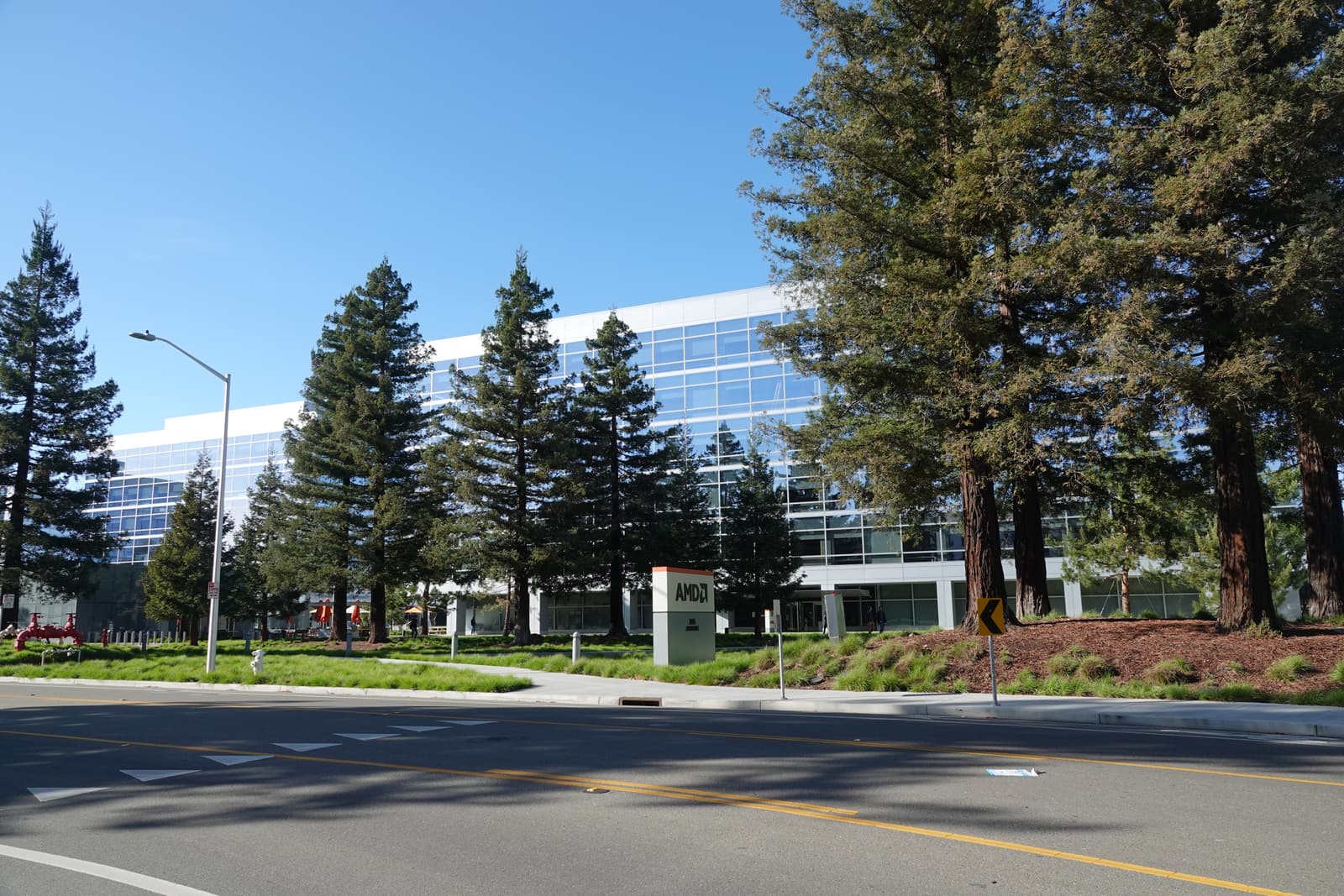
AMD's headquarters and primary engineering leadership sit in Santa Clara, California, but Austin, Texas is the company's largest single operational hub, with close to 3,000 employees. AMD's largest engineering centers outside North America are Bengaluru and Hyderabad, India.
| Site | Role | Scale |
|---|---|---|
| Santa Clara, CA (HQ) 2485 Augustine Drive | Executive leadership, corporate functions, core engineering | Headcount not specified in the cited sources |
| Austin, TX | Largest operational hub; engineering and design | Roughly 3,000 employees |
| Bengaluru, India | Major engineering center | Roughly 1,300 employees |
| Hyderabad, India | Major engineering center | Roughly 1,200 employees |
| Markham, Ontario, Canada | Engineering, graphics-adjacent legacy from the ATI acquisition | Roughly 350 employees |
| Singapore / EMEA sites | Regional engineering and business functions | Smaller footprint; AMD does not break out precise per-site headcount publicly, so treat any specific figure you see elsewhere with caution |
Singapore and AMD's various EMEA sites are real engineering and business locations, but reliable public headcount data for them is thinner than for the top five sites above. Rather than publish a specific number that can't be verified against AMD's own disclosures, it's more honest to describe them as smaller regional hubs and point candidates to the specific job posting's location field for current team size context.

Part VI: What Is AMD's Interview Loop Like?
AMD's overall interview difficulty rates 2.93/5 on Glassdoor with 68.4% positive candidate experiences and an average process length of roughly 16 days, moderate by big-tech and big-semiconductor standards (Glassdoor AMD Interview Questions, 2026). But that average hides a real split, one that most generic AMD interview guides miss entirely. Software Engineer roles are rated among the easiest AMD interviews, while Design Verification Engineer roles run harder, scoring just above 3/5 with a longer, more technical loop.
The aggregate stage mix, per Glassdoor: phone interview (26%), one-on-one interview (22%), skills test (15%), background check (10%), group panel (10%). Those percentages describe two functionally different interview processes wearing one company badge.
Software track. Comparable to a standard big-tech SWE process: recruiter screen, a DSA-focused technical phone screen, then onsite rounds. Data structures and algorithms prep, the kind used for most large-company software interviews, transfers directly.
Hardware track. Materially harder and domain-specific. Design and Verification Engineer roles run just above 3/5 difficulty, with roughly 60% positive experience and a loop of three rounds (two technical, one managerial) built around SystemVerilog and UVM, the Universal Verification Methodology used for chip verification. None of that has a software-interview equivalent, and no amount of LeetCode practice substitutes for it.
The prep angle that matters most: identify which "AMD" you're interviewing for before you prepare. LeetCode-style prep serves the software track. SystemVerilog, UVM, and computer-architecture fundamentals serve the hardware track. Treating AMD as one monolithic interview, the mistake most existing guides make, leaves hardware candidates under-prepared and software candidates over-prepared for a loop that isn't testing what they studied.
Ask your recruiter whether a waiting period applies before reapplying. There is no confirmed company-wide cooldown in the sources cited here, so do not assume a six-month rule.
Part VII: How Do You Actually Apply and Get Reviewed?
Apply directly at AMD's own career portal, careers.amd.com. Third-party job boards routinely lag the source posting, the same pattern documented across large-employer career pages generally. AMD's portal runs on iCIMS, confirmed directly from the login flow at careers-amd.icims.com, rather than the Workday or Greenhouse systems used by many peer tech employers. That's worth knowing, since the iCIMS application flow and account system behave a little differently than what candidates coming from a Workday-heavy job search may expect.
As with any large employer receiving heavy applicant volume in 2026, treat any recruiter contact that asks for upfront payment, requests ID or passport scans before an offer, or conducts an entire interview over text message as a red flag. AI-generated recruiting fraud has become common enough in 2026 that this is worth stating plainly rather than assuming it's obvious.
On sponsorship: AMD is a real, if not especially high-volume, H-1B sponsor. Third-party visa-data aggregators put AMD's FY2025 H-1B petition activity in the range of several hundred filings, with the large majority approved. That's consistent with Department of Labor Labor Condition Application (LCA) data showing AMD filed 841 LCAs in FY2025, with only a handful denied or withdrawn. LCAs are a required pre-filing step, not the same as approved H-1B petitions, so treat this as a directional signal of sponsorship activity rather than an approval count. Confirm your specific role's sponsorship status with your recruiter early, since filing volume and approval rates shift year to year.
Resume tips split by track, same as the interview. For Data Center and ROCm roles, name performance engineering, kernel-level optimization, and any CUDA-to-HIP porting experience explicitly. AMD is actively recruiting engineers who can help close the software gap, and naming that gap in a resume bullet signals real ecosystem fluency rather than generic interest. For hardware and Embedded roles, lead with ASIC or FPGA verification experience and specific EDA tooling, SystemVerilog and UVM by name, rather than general software credentials that don't map to what the hiring team is actually screening for.
Frequently Asked Questions
Is AMD hiring in 2026?
Yes, aggressively in Data Center and Embedded. AMD's headcount grew 10.7% to roughly 31,000 employees in FY2025, and Q2 2026 data center revenue grew 107% year over year to $6.7B as Helios AI racks began reaching Meta, OpenAI, and Oracle. Management called the ramp "the very beginning" on the August 2026 earnings call.
How much do AMD software engineers make?
Reported US total compensation ranges from about $155K at L5 to $446K at L10, with an overall median of $190K (Levels.fyi, checked September 20, 2026). These figures include salary, stock, and bonus. Confirm role-specific ranges with your recruiter, especially for hardware and silicon-design positions.
What is the AMD interview process like?
Overall difficulty is 2.93/5 on Glassdoor with a roughly 16-day average process, but it splits sharply by track. Software Engineer roles are rated among the easiest AMD interviews. Design Verification Engineer roles run harder, just above 3/5, with SystemVerilog and UVM-heavy technical rounds.
Does AMD sponsor H-1B visas?
Yes, at a real but modest volume relative to the largest FAANG filers. Department of Labor Labor Condition Application data (a required pre-filing step, not the petition itself) shows AMD filed 841 LCAs in FY2025 with only a handful denied or withdrawn, a directional signal of active sponsorship, not a petition-approval count. Confirm sponsorship status for your specific role with your recruiter early.
What is AMD's Helios AI system and why does it matter for hiring?
Helios is AMD's first AI rack-scale system, unveiled at Advancing AI 2026 and built around the Instinct MI455X GPU, 72 per rack. It began reaching Meta, OpenAI, and Oracle through 2026, with additional commitments from Anthropic and Microsoft. It's the clearest signal that AMD's Data Center and Embedded hiring in 2026 is demand-driven, not speculative.
What to Do Next
AMD in 2026 is not the company most "AMD careers" content still describes. It's running a data center segment that more than doubled year over year in a single quarter, shipping the industry's first credible rack-scale answer to NVIDIA's AI infrastructure dominance, and growing headcount at 10.7% to support it. The clearest signal for candidates is that the ramp itself is still early: management called Q3 2026 "the very beginning," which means the hiring surge behind it hasn't peaked.
The key takeaways: target Data Center or Embedded over Client and Gaming if hiring urgency matters to you, and know cold whether you're interviewing for the software track or the hardware track before you prepare. Apply directly at careers.amd.com rather than waiting for a third-party board to catch up. If you're also considering NVIDIA, read the comp and interview data side by side; the two companies are pitching fundamentally different value propositions to the same pool of engineers right now.
How to Get a Job at NVIDIA 2026
jobstrack.io
Get alerts for new AMD jobs that match your roles and locations.
References
AMD Official Resources
- AMD Careers: primary source for open roles; apply here directly rather than via aggregators
- AMD Investor Relations: quarterly earnings, SEC filings, strategic announcements
- AMD Helios Rackscale Solution: official product page for the AI rack-scale system
Financial and Headcount Data
- AMD Q2 2026 Press Release: $11.5B total revenue (+50% YoY), $6.7B data center revenue (+107% YoY), Q3 2026 guidance (Aug 4, 2026)
- AMD FY2025 10-K: $34.6B FY2025 revenue, ~31,000 employees, segment-level results (Feb 2026)
- AAI 2026: AMD Delivers Full-Stack Compute for the Agentic AI Era: Helios launch details, customer commitments
- Oracle and AMD Expand Partnership to Help Customers Achieve Next-Generation AI Scale: confirms the 50,000-GPU Instinct MI450 cluster on OCI starting Q3 2026 (Oct 2025)
Compensation and Interview Data
- Levels.fyi: AMD Software Engineer Salaries: community-sourced compensation data by level (checked September 2026)
- Glassdoor: AMD Interview Questions: 2.93/5 difficulty, 68.4% positive, stage-mix data (2026)
- U.S. Department of Labor: Office of Foreign Labor Certification Performance Data: Labor Condition Application (LCA) disclosure data; source for the 841 AMD FY2025 LCA filings cited in this guide
Context and Background
- CNBC: AMD launches Helios, its first rack AI system to rival Nvidia: Meta, OpenAI, Oracle, Anthropic, and Microsoft commitments (Jul 2026)
- TechCrunch: AMD takes on Nvidia with its Helios AI rack-scale system: Helios rollout timeline and specs (Jul 2026)
- How to Get a Job at NVIDIA 2026: AMD's primary competitor in AI compute
- First-Mover Advantage: Applying Early to Tech Jobs: why timing edge matters most during a hiring ramp
- LinkedIn Job Posting Delay: the lag between a company's own career page and third-party job boards
Image Credits
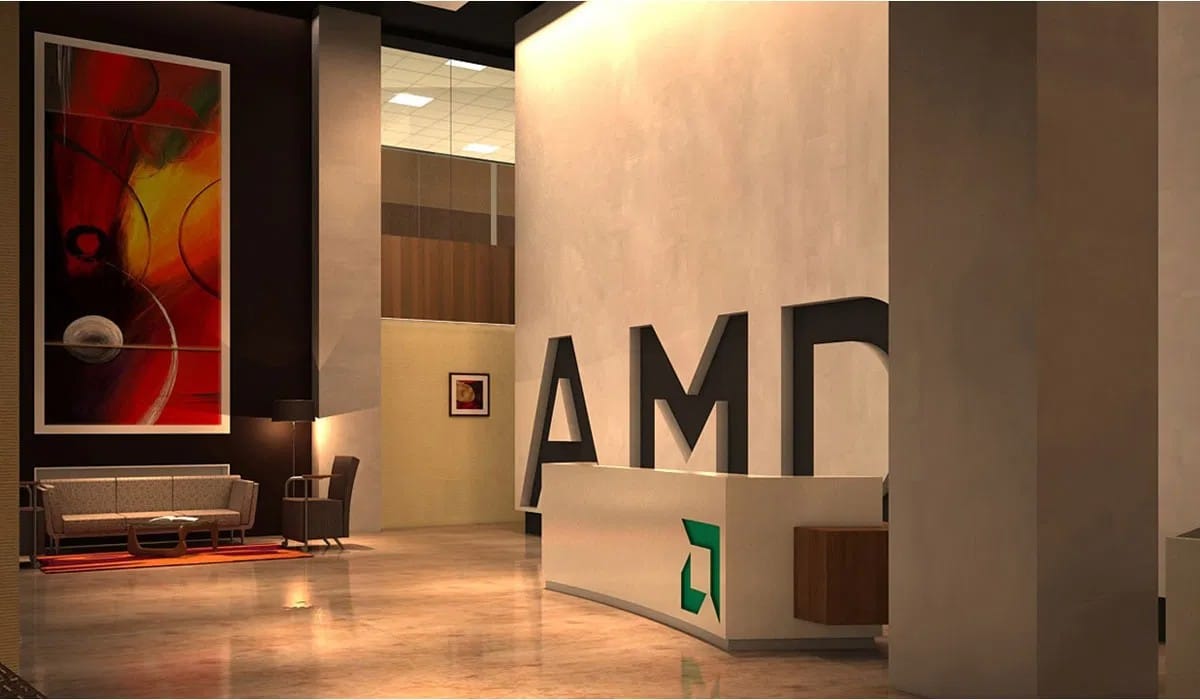
- AMD office reception, via HDblog: source of the reception interior photograph. Compressed for this guide; original photographer and reuse license are unconfirmed.
- AMD headquarters in Santa Clara: photograph by Lijiaxuan, via Wikimedia Commons, dedicated to the public domain under CC0. Resized and compressed for this guide.
More Articles
How to Get a Job at Figma in 2026: Salary, Interview Process, and Teams to Target
Figma's Q2 2026 revenue grew 48% as AI adoption accelerated. Learn which teams to target, compensation by level, and how its interview loop works.
Aug 21, 2026
How to Get a Job at Salesforce in 2026: Salary, Agentforce, and the Trailhead Path
Salesforce hiring in 2026: software engineer compensation, Agentforce and Data Cloud roles, the interview loop, Trailhead certifications, referrals, and how to apply early.
Jul 31, 2026
How to Get a Job at Snowflake in 2026: Salary, Interview, and the Databricks Question
Snowflake hiring in 2026: AI teams, SWE compensation, interview loop, Snowflake vs. Databricks, H-1B sponsorship, office hubs, and how to apply early.
Jul 13, 2026