

From Query Writer to Decision Partner: How Data Analysts Get Hired in 2026
How AI changed the data analyst market in 2026, why dashboards are no longer enough, and how analysts should reposition around context, judgment, and business decisions.
 jobstrack.io
Overview
Picture this: It is Tuesday morning. You just spent the last three days wrestling with a fragmented data pipeline. You fought with mismatched time zones across three different legacy databases, patched up a notoriously flaky API connection, and meticulously mapped messy anomalies just to build a comprehensive churn dashboard for the executive team. You are proud of it. You present the link in the weekly sync, expecting a nod of appreciation for untangling the mess.
Then, the VP of Sales opens their new enterprise AI copilot, types a plain-English sentence, "Show me Q1 churn by region and highlight the biggest drop-offs," and gets a visualization that is 80% as good in exactly thirty seconds.
If you are a Data Analyst navigating the 2026 job market, you have likely felt the quiet, sinking feeling of a moment exactly like this. You’ve never had more data at your fingertips. And if you aren't paying close attention to the shifting currents, you’ve never had less influence.
There is a lot of polite, comforting advice floating around right now on LinkedIn and industry blogs. It tells analysts to simply "learn how to prompt," "upskill in Python," or "become an AI whisperer." But that avoids the deeply uncomfortable reality of what is actually happening inside companies today.
Here is the truth: AI didn’t replace analysts. It replaced the need to answer predefined questions. If your job starts with a stakeholder coming to you and asking for a dashboard, you are already operating in a layer that AI is rapidly commoditizing. You are missing the point if you think your job is data. If your value comes from answering questions, you are already competing with AI. And that is a race you will lose.
The Bypass: When the Requests Stop
Let’s talk about the biggest threat to your career right now. It isn't a massive wave of analyst layoffs, and it isn't the sudden arrival of a super-intelligent AGI taking over the enterprise servers.
It’s silence.
Historically, analysts were the gatekeepers of corporate truth. If marketing wanted to know campaign ROI, or the product team wanted to see user feature adoption, or finance needed to understand a localized revenue dip, they had to submit a ticket. You had inherent, structural job security because you held the keys to the database. You were the only one who spoke the complex query languages required to unlock it. You were the tollbooth on the highway of business information.
Today, that bottleneck is gone. For the first time in the history of the profession, stakeholders don’t need to come to you to explore data. Many already aren’t.
They are using natural language BI copilots. They are asking their own questions and getting answers that are good enough. The Head of Product doesn't want to wait 48 hours for a Jira ticket to be resolved to know if a new feature is tanking engagement; they ask the bot before their 10 AM one-on-one. The CFO doesn't need you to build a pivot table; they drag and drop a CSV into their secure LLM workspace.
Because of this, the volume of routine inbound requests hitting analyst desks is dropping precipitously.
The biggest risk in 2026 is not losing your job. It’s becoming irrelevant inside it.
When stakeholders can self-serve, analysts who passively wait for tickets to arrive become invisible. They sit around maintaining legacy dashboards that no one checks anymore, feeling like curators of a ghost town. If your primary value to an organization comes from simply producing data outputs, you are competing directly with a machine that does not sleep, does not complain about messy schemas, and costs a fraction of your salary.
Inside the Room: Why AI Can’t Read It
If AI can instantly output charts, write flawless Python scripts, and generate complex SQL joins in milliseconds, what is left for you? The answer lies in the fundamental difference between a database and reality.
AI is confined to the digital records it can access. It does not sit in on the tense, politically charged marketing syncs where everyone is quietly trying to defend their own KPIs. It does not know about the office politics, the hidden leadership biases, or the panicked, off-the-record conversations happening in Slack.
An AI copilot can easily look at a massive dataset and tell you that user conversion rates dropped 15% on a Thursday. It can even build a beautiful scatter plot showing exactly which demographic dropped off the most.
But it cannot tell you that the VP of Marketing is about to overreact to it. It cannot tell you that the conversion drop is actually because the new Sales Director quietly changed the discounting structure to hit a personal quarterly bonus target. It doesn't know that a competitor just launched a massive counter-campaign that has the executive team spooked, causing them to look for scapegoats in the data.
AI can answer questions. It cannot decide which questions matter. And in most companies, the wrong question is more dangerous than the wrong answer. If the business asks, "Why are our Q3 sales down?" the AI will dutifully analyze the sales data and find patterns. But a great analyst knows the real question is, "Did our recent pricing change incentivize the sales team to delay closing contracts until Q4?"
The analysts who are thriving in 2026 are not the fastest at querying data. They’re the ones who understand what the data means before anyone even asks. They look at the 15% drop, correlate it with an unrecorded shift in business strategy, walk down the hall (or jump on a call), and stop a bad, highly reactive decision from being made.
SQL queries data. Context queries reality.
The New Analyst Workflow
To survive this shift, your day-to-day workflow has to change dramatically. The difference between a junior analyst and a senior one in 2026 is not technical skill. It’s how they handle this exact moment. The way you process a request determines whether you are viewed as an expendable order-taker or an indispensable strategic partner.
The Old Workflow (Commoditized):
- Receive a ticket requesting a specific metric or table.
- Write the query to extract the data.
- Build the dashboard or format the spreadsheet.
- Send the link and close the ticket.
The New Workflow (Differentiated):
- Question the request: Why are they asking for this? What is the underlying anxiety, fear, or opportunity driving the request? (e.g., "Are you asking for this churn data because you are worried about the new pricing tier, or because the board meeting is tomorrow?")
- Define the decision context: If the data shows X, what action will the business take? If it shows Y, then what? If there is no clear action tied to the data, push back.
- Use AI to explore: Let the copilot write the boilerplate SQL, handle the null-value imputation, and generate the baseline charts. Do not waste your time writing code that a machine can write in a second.
- Validate the reality: AI hallucinates. Cross-check the outputs against your deep, idiosyncratic knowledge of the business's quirks, broken pipelines, and historical anomalies.
- Recommend action: Never just deliver the numbers. Deliver a heavily opinionated perspective on what the numbers mean for the business.
- Follow through: Circle back a week later to see if the decision actually worked. Become a stakeholder in the outcome, not just the output.
You are no longer a data fetcher. You are a filter for reality. Your job is to make sure the right questions are being asked in the first place.
Where the Jobs Actually Are in 2026
If you understand this dynamic, your approach to the job market needs a fundamental reset.
Big Tech (FAANG) hiring has permanently changed. They are running incredibly lean data organizations, heavily utilizing their own proprietary AI tools to handle routine analysis. If you track roles directly on company career pages or through real-time alert tools (e.g., tools like Jobstrack.io, RSS feeds, or custom scrapers), you will notice a distinct, unforgiving trend: the sheer volume of generalist analyst roles at top-tier tech companies is shrinking, and the few that do pop up receive hundreds of hyper-competitive applications within minutes.
But look outside the traditional tech bubble, and the landscape is entirely different. Traditional enterprise sectors, including healthcare, finance, logistics, manufacturing, and traditional B2B SaaS, are hiring aggressively.
Why? Because over the last two years, these companies bought all the shiny new AI tools. They implemented the enterprise copilots. And now, their executives are drowning in noise. They are staring at auto-generated charts, contradictory metrics, and AI-hallucinated insights that don't hold up in the real world.
A healthcare provider doesn't just need a dashboard of patient wait times; they need an analyst who understands how nuanced billing codes impact patient flow. A logistics company doesn't need an AI to plot delivery routes; they need a human to explain why the AI's mathematically "optimized" route ignores a critical, unmapped union regulation at a specific port.
These companies don't need people to build more dashboards. They need adults in the room who can translate the algorithmic noise into actual, defensible business decisions. They need interpreters.
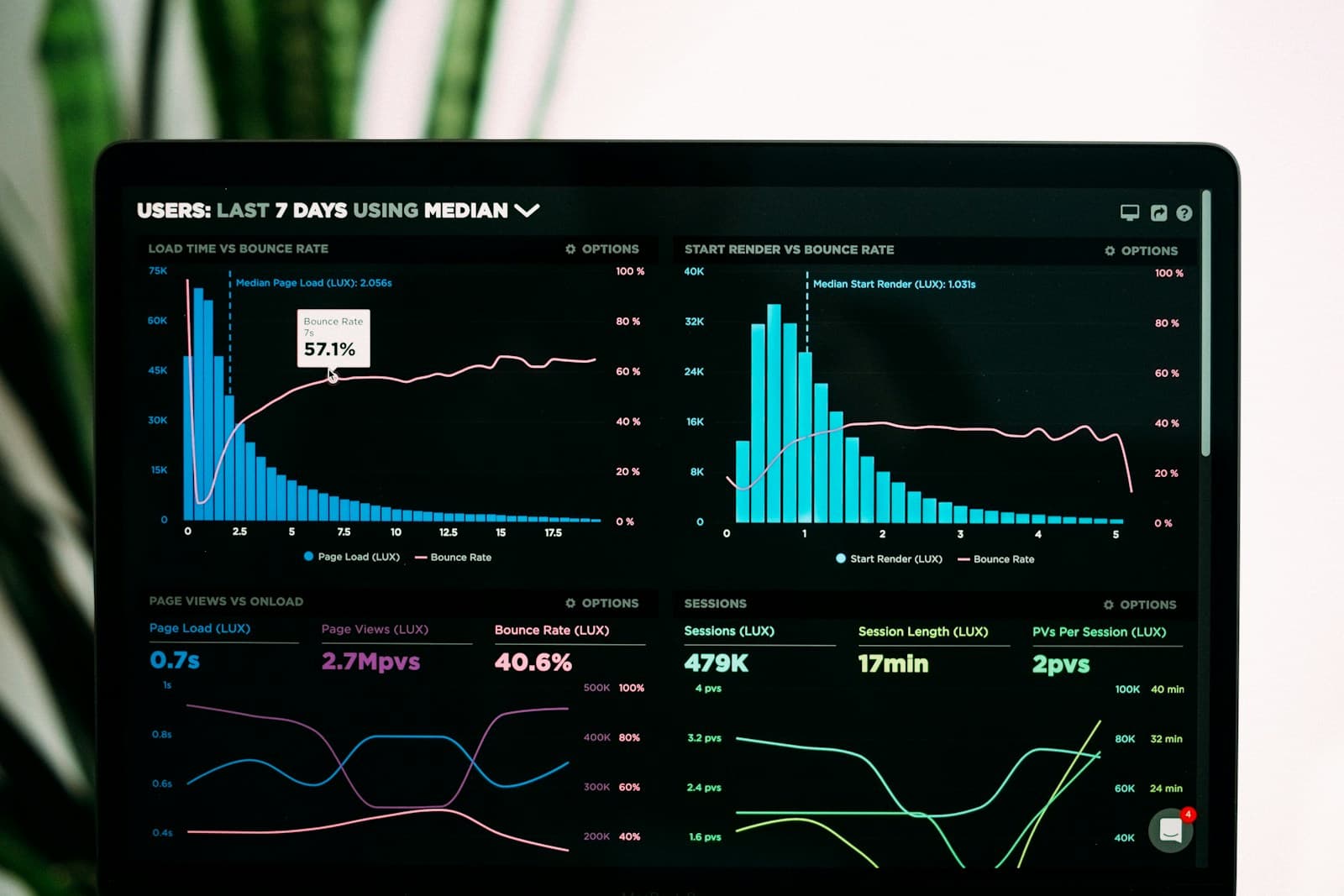
We are also seeing this demand explode internationally. European markets are aggressively recruiting AI-literate data professionals. Institutions navigating strict data governance, like the European Medicines Agency, are heavily recruiting analysts who can safely bridge the gap between AI generation and strict, highly regulated compliance. The demand for human oversight is a global phenomenon.

jobstrack.io
Learn how to create job alerts for Data Analyst roles.
Tactics for the 2026 Market
If you are actively interviewing, or simply trying to secure your position internally, you need to signal immediately that you understand this new reality. You have to prove you are an interpreter, not a query builder.
- Purge the "Tool Soup" from Your Resume: If your resume reads like a grocery list of tools, Expert in SQL, Python, Tableau, Looker, dbt, Snowflake, you are loudly signaling that you are a commodity. Stop leading with the software you use. Rewrite your bullet points to highlight the business context you provided and the disasters you averted. Instead of "Built a PowerBI dashboard to track customer retention using advanced SQL," write "Identified a hidden behavioral churn metric that prevented a costly, misguided marketing pivot, saving an estimated $1.2M in misallocated ad spend."
- Stop Competing on Code; Compete on Skepticism: In interviews, hiring managers absolutely expect you to use AI to work faster. If you say you write all your SQL from scratch, you will look inefficient. But your edge is not using AI. It is knowing when the AI is completely wrong. Talk about how you validate outputs, spot data that lacks business context, and protect the organization from making decisions based on bad AI assumptions.
- Practice Saying "No": The most defining trait of a senior analyst today is the ability to gently reject requests. When a stakeholder asks for a new dashboard, practice asking, "What specific decision will this drive?" If they cannot give you a clear, actionable answer, do not build it. Offer a simpler, targeted one-off analysis instead.
- Master the "So What?": Never deliver a raw dataset or a chart without an opinion attached. Force yourself to write a two-sentence summary on every deliverable that explains exactly what the business should do next based on the data. Take a stance.
The End of the Reporting Analyst
The anxiety surrounding the data profession right now is completely justified. The technical barriers that used to protect your job, your salary, and your status have been lowered to the floor. It is deeply uncomfortable to realize that the skills you spent hundreds of late nights mastering are now just the baseline expectation to even get in the room.
But this is not the end of the Data Analyst. It is the end of the reporting analyst as a role.
By letting AI handle the endless, mindless busywork of query building, null imputation, and data formatting, you are finally free to do the job you were actually hired for: guiding human beings through complex, high-stakes decisions in an uncertain world.
Data has never been more abundant. Context has never been more scarce. And in 2026, scarcity is what you get paid for.
jobstrack.io
Learn how to create job alerts for Data Analyst roles.
References
Data Analysis and AI
- Boston Consulting Group (April 2026): AI Will Reshape More Jobs Than It Replaces - Research illustrating how automation shifts output expectations and forces technical roles into higher-level strategic functions. Read Report
- Microsoft Learn: Introduction to Copilot for Power BI - Official documentation showing how natural-language AI copilots generate reports, summaries, and analytical starting points inside BI workflows. Read Documentation
- Anthropic Research (March 2026): Labor market impacts of AI: A new measure and early evidence - An analysis confirming the shift from pure technical execution to system oversight and context translation. Read Research
Hiring Market Context
- World Economic Forum (2025): The Future of Jobs Report 2025 - Labor-market outlook showing how AI, big data, and analytical thinking are reshaping skill demand. Read Report
- Tableau: AI analytics and augmented analytics - Product documentation and examples showing how AI-assisted analytics changes dashboard and insight workflows. Read Overview
Related Reading
- The First-Mover Advantage: How to Apply Early to Tech Jobs in 2026 (Supported by Data) - Why speed-to-apply materially changes visibility in saturated hiring funnels.
Image Credits
More Articles
Security Engineer Career Guide 2026: AI, Salaries & Hiring
Security engineer salaries, essential skills, certifications, and how vulnerabilities in AI-generated code are reshaping cybersecurity hiring in 2026.
Aug 25, 2026
Engineering Manager Jobs in 2026: The Transition, Interview, and Hiring Playbook
Engineering Manager is a career change, not a promotion. Learn the 2026 EM market, first-time manager path, interview playbook, and how to apply early.
May 17, 2026
DevOps & SRE Career Guide 2026: Salaries & How to Get Hired
83% of organizations run Kubernetes in production. Senior SREs earn $185K median base. DevOps/SRE skills, certs, salaries, and interview guide for 2026.
May 11, 2026