

The LatAm Bridge: Getting Hired in Miami Tech in 2026
A practical guide to Miami's 2026 tech hiring market, covering fintech, LatAm bridge roles, salaries, no state income tax, visas, and early-application timing.
 jobstrack.io
Walk through Brickell on a Tuesday morning and the transformation is visible in the architecture. The old bank towers along Brickell Avenue now house venture firms and hedge fund satellite offices. The new ones, still going up along the waterfront, are already partially leased by tech companies that a San Francisco lease broker would have trouble placing two years ago. Citadel's global headquarters is here now, a move Ken Griffin announced in 2022, completed in 2023, and backed by the firm's $62 billion in assets under management relocating from Chicago. Thrive Capital opened a Miami office. Founders Fund planted a flag. SoftBank Latin America established its regional investment hub.
Miami is not pretending to be Silicon Valley. It is doing something more interesting: becoming the capital of a different geography, the bridge between the United States tech economy and Latin America's 650 million consumers. No other American city occupies that position with Miami's combination of infrastructure, financial capital, and bilingual talent density.
The "Silicon Beach" branding is a Chamber of Commerce term. The underlying market reality is more specific: Miami in 2026 is where fintech meets LatAm expansion, where crypto trading infrastructure sits next to healthtech platforms serving Spanish-speaking patients, where quant trading firms and regional enterprise software companies are competing for the same ML engineers. Florida has no state income tax. The cost of living, while rising, remains meaningfully below San Francisco and New York. And jobs at Miami-based companies go live on career pages before any aggregator indexes them, which means the candidates who monitor directly have a material advantage.
Here's what the 2026 Miami tech job market actually looks like.
Key Takeaways
- Florida's tech industry generated $116 billion in economic output in 2024, with Miami-Dade County accounting for the largest urban cluster; the metro added approximately 35,000 net tech jobs between 2020 and 2025 (CompTIA State of the Tech Workforce, 2025)
- Florida has no state income tax, which adds $8,000–$22,000 in annual post-tax income for mid-to-senior tech roles compared to California or New York equivalents at the same base salary
- Average software engineer base salary in Miami is $142,000–$165,000; ML engineers average $158,000–$195,000, with Citadel quant engineering roles reaching $250,000+ base (Glassdoor, April 2026)
- Miami is the US city with the highest concentration of bilingual (English/Spanish) tech professionals, making it the default hiring market for US companies building LatAm-facing engineering or regional leadership teams (US Census Bureau, 2024)
- Roles posted on Miami career pages appear on LinkedIn and Indeed 24–72 hours later; applying within the first 24 hours yields 2–3x more interview responses than waiting for aggregators
How Big Is the Miami Tech Job Market in 2026?
Florida's technology industry generated $116 billion in economic output in 2024 and employed approximately 682,000 tech workers statewide, according to CompTIA's 2025 State of the Tech Workforce report (CompTIA State of the Tech Workforce, 2025). Miami-Dade County accounts for the state's largest metro concentration, with the Greater Miami metro (encompassing Miami, Coral Gables, Doral, and the broader urban corridor through Miramar and Fort Lauderdale) adding approximately 35,000 net tech jobs between 2020 and 2025. That growth rate places Miami among the fastest-growing tech markets in the United States over that window, behind only Austin.
The venture capital environment shifted materially after 2020. Miami startups and VC firms collectively raised and deployed more capital in 2022–2024 than in the entire preceding decade. Notable deals from 2024 and 2025 include Cro Metrics (Series C), Softchoice (continued Miami expansion), and multiple fintech rounds anchored by SoftBank Latin America Fund and Andreessen Horowitz's Latin America team. eMerge Americas, the annual tech conference held in Miami that is the largest technology event connecting the US and Latin America, hosted 15,000 attendees in 2025 and has become a genuine deal-flow event, not just a networking conference (eMerge Americas, 2025).
Florida's unemployment rate held at 3.5% through late 2025 (Florida Department of Economic Opportunity / BLS, November 2025), below the national average. For tech candidates at the mid-to-senior level, competing-offer dynamics are real in fintech, healthtech, and ML infrastructure, where demand continues to outpace local supply in 2026.
The LatAm Bridge Effect: Why Miami's Market Is Structurally Different
Most tech market guides treat Miami as a smaller, warmer version of New York's financial sector, or as a crypto-adjacent Wild West. Neither framing captures what has actually happened to Miami's tech market between 2020 and 2026. The city has developed a structural position that no other US city holds: it is the default headquarters for US technology companies that want genuine proximity to Latin American operations, talent, and customers.
Latin America represents 650 million consumers, a rapidly expanding internet economy, and a region where SaaS penetration, fintech adoption, and cloud infrastructure are in the early-to-mid stages of the S-curve that the US completed a decade ago.
For US companies expanding south, the calculus is simple: you need a regional hub with US legal infrastructure, English-speaking leadership, dollar-denominated operations, and physical proximity to markets from Mexico City to São Paulo. Miami is the answer, in every operational dimension, that no other US city can fully match.
The bilingual talent advantage is real and quantifiable. Miami-Dade County is over 70% Hispanic or Latino by population, with the majority speaking Spanish as a first or co-equal language.
The University of Miami, Florida International University, and a pipeline of bilingual professionals from Venezuela, Colombia, Argentina, and Brazil have created a talent pool that is genuinely rare: software engineers and product managers who hold US credentials, work fluently in English, and can run LatAm teams, sales processes, or partner relationships without translation overhead.
The practical consequence for job seekers: Miami's tech hiring market rewards bilingual candidates, LatAm domain knowledge, and regional network exposure in ways that San Francisco and New York do not. A software engineer who has worked on payment localisation for Brazil, or a product manager who has launched a SaaS product for the Mexican SMB market, is a materially stronger candidate in Miami than anywhere else in the United States. That differentiation is worth naming explicitly on your resume and LinkedIn, not burying it.
Wynwood and Brickell serve different functions in Miami's tech geography. Wynwood (the Arts District in northwest Miami) is the city's startup cluster: lower rents, converted warehouse offices, a density of Series A and B companies, and a culture that resembles Brooklyn or Austin more than Wall Street. Brickell is the financial and enterprise tech district: glass towers, Citadel's campus, hedge fund offices, and the large-company engineering teams. Understanding which neighbourhood a company calls home tells you something about its culture and hiring profile before you apply.

Which Companies Are Actually Hiring in Miami Tech?
Miami's employer base divides into five meaningful categories, each with different hiring dynamics and compensation structures.
The Post-2020 Financial Tech Migrants are the highest-profile additions to Miami's market. Citadel (quantitative hedge fund and market maker, $62B AUM) relocated its global headquarters from Chicago in 2022–2023. Ken Griffin's personal relocation to Miami preceded the corporate move and signalled a genuine commitment, not a tax-filing manoeuvre. Citadel Securities (the market-making affiliate) followed. Quant engineering and software infrastructure roles here are among the highest-compensated positions in the Miami market, with total compensation regularly exceeding $400,000 for senior engineers.
The Legacy Miami-Headquartered Tech Companies have been here far longer. Chewy (online pet supply, ~19,000 employees) operates its engineering and technology leadership from Dania Beach (Greater Miami metro). Ultimate Kronos Group (UKG), formed from the 2020 merger of Ultimate Software and Kronos, is headquartered in Weston, 30 minutes north of Miami, and employs thousands of software engineers and ML specialists building HR technology for enterprise clients.
Carnival Corporation's technology division in Doral builds the guest experience and operational software running its global cruise fleet. Magic Leap (augmented reality hardware and software) operates from Plantation, Florida.
The US Tech Giant Offices: Miami has attracted meaningful engineering presence from Microsoft, Google, Amazon AWS, and Spotify (which announced its Latin America engineering hub in Miami). These are not satellite offices with a few local salespeople. They are genuine engineering teams, particularly at AWS and Spotify, where LatAm market development has driven actual product engineering investment in Miami.
The Crypto and Fintech Layer: Miami positioned itself aggressively as a crypto-friendly jurisdiction following Mayor Francis Suarez's public advocacy in 2021–2022. FTX's collapse in 2022 tempered the most speculative activity, but the underlying infrastructure remained: payment rails, digital asset compliance tooling, and blockchain developer infrastructure companies are still concentrated here at a density unmatched outside New York. Bitso, dLocal, and Pomelo, all LatAm-facing fintech companies, have Miami as their US anchor.
The LatAm Bridge Companies are the most Miami-specific category. These are US-registered companies whose core business is operating software products, payment systems, or regional logistics for Latin American markets. Rappi (Colombian super-app), MercadoLibre's US operations, and Nubank's US team all maintain Miami presences. So do the US divisions of Despegar, OLX, and a growing list of LatAm SaaS companies establishing their North American footholds here.
The career pages worth monitoring directly, before aggregators index them:
| Company | Career Page |
|---|---|
| Citadel / Citadel Securities | citadel.com/careers |
| Chewy | careers.chewy.com |
| UKG (Ultimate Kronos Group) | ukg.com/careers |
| Carnival Corporation | careers.carnivalcorp.com |
| Spotify (LatAm Eng Hub) | lifeatspotify.com |
| Amazon AWS (Miami) | amazon.jobs → filter: Miami |
| Google (Miami) | careers.google.com → filter: Miami, FL |
| Magic Leap | magicleap.com/careers |
| dLocal | dlocal.com/careers |
| Bitso | bitso.com/careers |
What Can You Expect to Earn in the Miami Tech Job Market?
Senior software engineers in Miami earn $175,000–$270,000 in total compensation at top-tier employers, with a base salary median of approximately $152,000 for senior roles across the market (Levels.fyi, 2026). That trails San Francisco's senior median meaningfully, but Florida's zero state income tax closes a significant portion of the gap in post-tax income. A senior engineer earning $160,000 base in Miami takes home approximately $12,000–$18,000 more per year than the same base in California, before accounting for the cost-of-living differential.
The no-state-income-tax advantage compounds over time. Our cost-adjusted analysis of Miami versus San Francisco and New York, using 2026 federal and state tax schedules, average Miami rent of $2,900/month for a one-bedroom, and SF rent of $3,400/month, shows that a Miami-based software engineer earning $155,000 base has approximately $8,400–$14,200 more in annual discretionary income than a San Francisco counterpart at $185,000 base, after taxes and rent. The Miami base salary is $30,000 lower on paper and $8,000+ higher in practice.
UKG and Chewy offer the most structured compensation at the enterprise level, with defined bands and predictable bonus structures. Citadel and Citadel Securities compensation is non-public but reported by employees on Glassdoor and Levels.fyi at total compensation of $350,000–$600,000+ for senior quant and systems engineers. The variance in the Miami market is high: quant finance and fintech employers pay substantially more than regional enterprise tech companies, and candidates should treat the market as two distinct tiers.
What Industries Drive Miami Tech Hiring?
Miami's tech hiring concentrates in five sectors, each shaped by the city's specific geography, demographics, and post-2020 capital flows.
Fintech and Payments is the largest single sector. Miami's proximity to LatAm financial markets, its concentration of payment infrastructure companies serving cross-border dollar flows, and the presence of Citadel Securities' market-making operations collectively make this the city's most technically demanding hiring environment. Payment companies building for LatAm, including dLocal, Bitso, and Pomelo, require engineers who understand both US regulatory frameworks and the fragmented local payment rail ecosystems of Brazil, Mexico, Colombia, and Argentina. That domain knowledge commands a meaningful premium.
Healthtech and MedTech has grown significantly, driven by the concentration of healthcare systems and hospital networks in South Florida. Baptist Health South Florida, Nicklaus Children's Hospital, and University of Miami Health System all operate tech organisations building patient-facing and operational software. BrightSpring Health Services and Modernizing Medicine (headquartered in Boca Raton, in the broader South Florida market) are among the healthtech employers hiring software engineers and data engineers with clinical domain familiarity.
Logistics and Supply Chain Tech: South Florida's position as a major port and logistics hub for LatAm imports drives demand for routing, warehouse management, and customs-tech software. Ryder System (commercial transportation, Miami HQ) operates a large internal tech organisation. Carnival Corporation's tech division, which builds the guest experience and operational software for its global fleet, falls into this category as well.
Enterprise SaaS and HR Tech: UKG alone employs thousands of engineers in the South Florida corridor. The company builds workforce management and HCM (Human Capital Management) software for enterprise clients globally. Its Weston campus is one of the largest engineering employers in the entire South Florida market and offers a structured, career-path-oriented environment that contrasts sharply with Miami's startup culture.
Crypto and Digital Asset Infrastructure: The post-FTX shakeout reduced the most speculative activity but left a durable layer of blockchain infrastructure, digital asset custody, and compliance tooling companies in Miami. The city remains the second-largest US hub for crypto-adjacent tech hiring after New York, with roles in smart contract development, on-chain data analysis, and AML/KYC systems for digital asset platforms.
Is Miami Tech Visa-Friendly for International Candidates?
Miami's tech hiring is predominantly aimed at US citizens and permanent residents in 2026, with important exceptions. The city's STEM ecosystem is less H-1B-dependent than San Francisco or Seattle because the local talent pool, particularly the bilingual engineering workforce, is large and locally trained. However, several pathways exist for international candidates.
H-1B sponsorship is available at the larger employers: UKG, Google, Microsoft, Amazon AWS, and Chewy all sponsor H-1Bs routinely. Citadel and Citadel Securities sponsor for exceptional quantitative talent. The Miami startup layer is less consistent: many Series A and B companies will sponsor if the candidate profile is strong enough to justify the legal cost.
The EB-2 NIW (National Interest Waiver) pathway is worth considering for candidates with demonstrable expertise in STEM fields that align with US economic priorities. Immigration attorneys in Miami with LatAm client experience are more accessible here than in most US cities, given the concentration of international professionals who have navigated US immigration from LatAm starting points.
LatAm talent in Miami's remote-first LatAm teams: Several Miami-based companies operate genuinely remote engineering teams that hire directly in Brazil, Colombia, Mexico, and Argentina, while maintaining Miami-based technical leadership. If you're a LatAm-based engineer seeking to join a US-registered company without relocating, Miami's tech ecosystem is the most accessible entry point in the US market. Companies like Bitso, dLocal, and Lemon Cash operate exactly this model.
How Does Miami's Cost of Living Compare to SF and NYC?
Miami's cost of living has risen significantly since 2020, driven by the tech migration wave and broader South Florida real estate demand. It is no longer the "cheap" alternative it was in 2019, but it remains materially less expensive than San Francisco on nearly every metric.
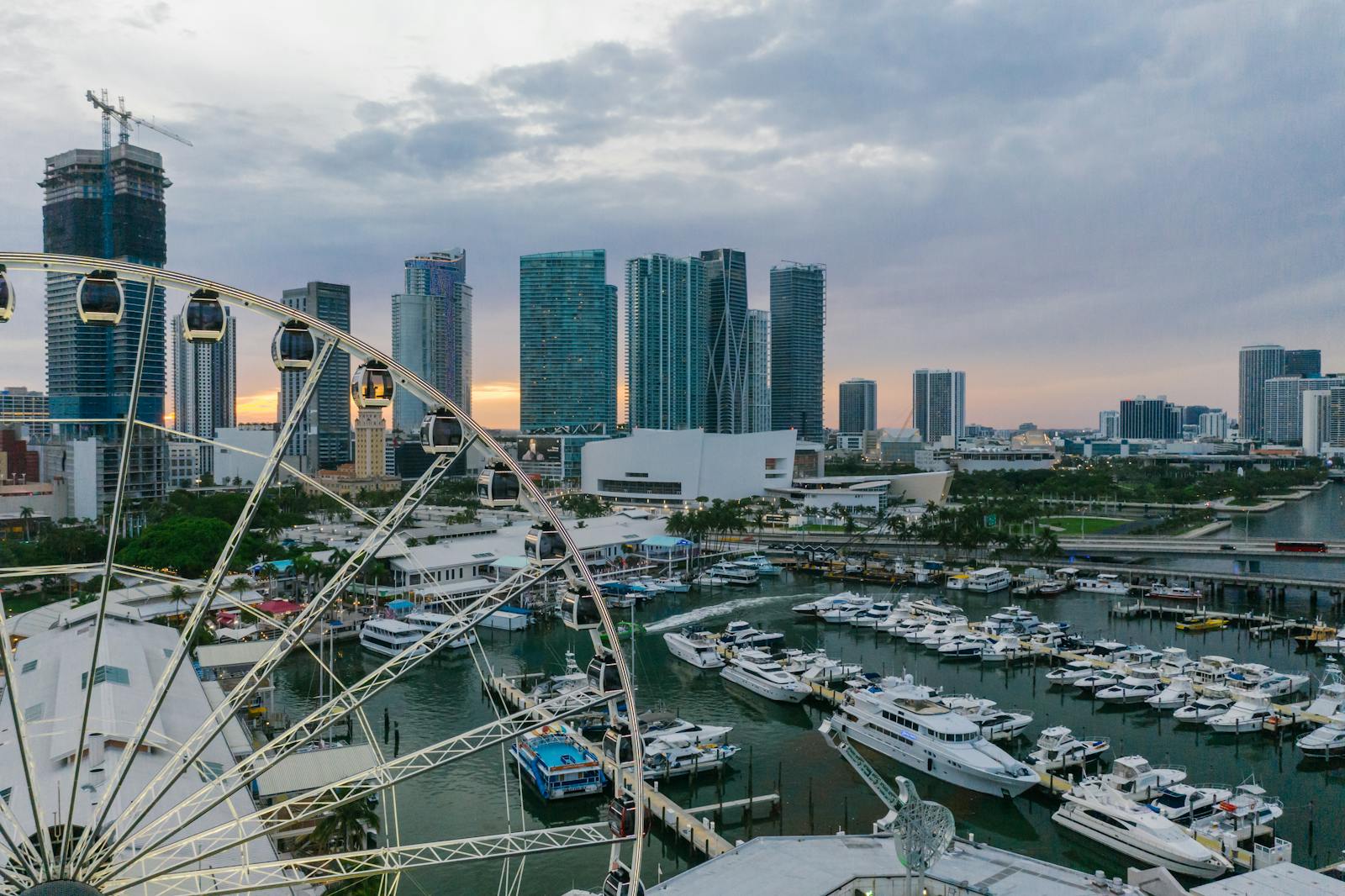
One-bedroom apartment rentals in Brickell (the premium district closest to tech employers) average $3,200–$3,800/month in 2026. In Wynwood, Midtown, or Edgewater: $2,400–$3,000/month. The overall Miami-Dade County median for a one-bedroom sits at approximately $2,900/month (Zumper Miami Rental Report, March 2026), compared to San Francisco's $3,400/month and Manhattan's $4,200/month.
The no-state-income-tax advantage is not theoretical. It appears in actual take-home pay from day one. Florida levies no state income tax at all; California taxes the same income at 9.3% to 13.3% for tech salaries; New York state adds 6.85% to 10.9%. For a software engineer earning $155,000, the annual delta is $14,000–$20,000 in additional post-tax income compared to California equivalents, before touching the rent differential.
What Miami does not offer cheaply: property purchase prices have increased 60%+ since 2020 (Redfin / Zillow estimates, 2025). If buying a home is the medium-term goal, the for-purchase market is expensive relative to income multiples. The rental market is the more accessible entry point for candidates relocating for tech roles.
How to Apply for Miami Tech Jobs Before the Queue Builds
Roles appear on company career pages 24–72 hours before LinkedIn, Indeed, or Glassdoor index them. Candidates who apply within 24 hours of a posting see 2 to 3x more interview responses than those who apply after the aggregator queues build (GoApply, 2024). In Miami's market specifically, the talent pool for senior fintech, ML, and bilingual engineering roles is smaller than in SF or NYC, which means first-batch applications carry even greater relative weight.
The most effective approach is direct career page monitoring: setting alerts or checking Citadel, UKG, Chewy, Google Miami, and Spotify LatAm Hub career pages the day roles go live, rather than waiting for LinkedIn's delayed feed.

jobstrack.io
Learn how to create alerts for roles in Miami.
For the full timing analysis, including platform delay data by company type and market, see our first-mover advantage guide. The gap between "first 24 hours" and "day 5" is where most applications go to die. Monitoring directly is what closes it.
Frequently Asked Questions
Is Miami actually a serious tech market or just hype?
Miami's tech market is real and measurable: $116 billion in Florida tech economic output (CompTIA, 2025), Citadel's genuine HQ relocation from Chicago, UKG's 3,000+ engineering employees in Weston, Chewy's full technology organisation in the metro, and Spotify's LatAm engineering hub. The "Silicon Beach" branding is Chamber of Commerce language, but the underlying employer base and hiring volume are substantive. It isn't San Francisco or New York in scale, but it is a top-10 US tech market by employer density for specific specialisations.
Do I need to speak Spanish to work in Miami tech?
Spanish fluency is not a hard requirement for most engineering roles at the larger employers (UKG, Chewy, Carnival, Google Miami). It is a genuine differentiator, and for any role that involves LatAm-facing product work, regional team management, or cross-border operations, bilingual candidates have a material advantage. At fintech companies focused on LatAm markets, including Bitso, dLocal, and Pomelo, Spanish or Portuguese fluency is effectively required for non-engineering leadership roles.
How does Florida's no state income tax affect my Miami tech salary offer?
Florida has zero state income tax. For a software engineer earning $150,000 in Miami versus $185,000 in San Francisco, the California state tax on the SF salary runs approximately $15,000–$17,000 annually. The Miami engineer at $150,000 pays $0 in state tax. After adjusting for the ~$5,000 rent differential (Miami is cheaper), the Miami offer may yield more annual discretionary income despite the lower headline number. Model it specifically with your own numbers because the gap is frequently larger than candidates expect.
What is the eMerge Americas conference and is it worth attending?
eMerge Americas is the largest technology conference connecting the United States and Latin America, held annually in Miami. The 2025 edition drew 15,000 attendees and featured speakers from SoftBank, Google, and major LatAm unicorns. For candidates targeting LatAm-bridge roles, regional engineering leadership, cross-border fintech, or LatAm SaaS expansion, eMerge is a genuine networking and visibility event, not just a conference circuit stop. Recruiters from Spotify, Amazon AWS LatAm, and several unicorn-stage companies attended in hiring mode in 2025.
How does Miami compare to Austin for tech job seekers?
Both markets offer no state income tax and a lower cost of living than SF or NYC. Austin's tech market skews toward enterprise SaaS and semiconductor companies (Dell, Apple, Samsung Semiconductor, Tesla Gigafactory tech). Miami's market skews toward fintech, LatAm bridge roles, and quant finance. Austin is larger in total tech headcount and has a more established startup funding infrastructure. Miami's unique advantage is the LatAm angle: if your profile, language skills, or career goals involve Latin American markets, Miami has no equivalent in the US.
What Miami Actually Delivers
People come to Miami tech for specific reasons. Not the research-lab culture of Boston or the hypergrowth consumer app environment of San Francisco. Something that looks like a lifestyle choice from the outside but has real structural logic: year-round weather, no state income tax, a bilingual professional community that makes LatAm market work feel like home rather than an international assignment, and a set of employers that are genuinely building things at scale.
The clearest signal that Miami's tech market has matured is the quality of candidates it's now retaining. In 2019, strong Miami-based engineers routinely left for San Francisco, Seattle, or New York because the employer options weren't competitive. In 2026, with Citadel, UKG, Chewy, Spotify's LatAm hub, and AWS Miami all hiring actively, the flight pattern has reversed: candidates from those cities are choosing Miami, and Miami-trained engineers are staying. That's the structural shift that marks a market reaching maturity.
The LatAm bridge position is the most durable competitive advantage Miami holds. Latin America's tech economy is growing faster than North America's or Europe's on a percentage basis. The companies best positioned to capture that growth are the ones headquartered or operating from Miami. For candidates with the right combination of technical skill, bilingual fluency, and LatAm domain experience, there is no better market in the United States in 2026.
For other major US tech markets covered in depth, see our Boston tech job guide and Austin tech job guide.
References
Miami Tech Market and Employment
- CompTIA State of the Tech Workforce 2025. Annual state-by-state technology industry employment and economic output; source for the $116 billion Florida figure and 682,000 statewide tech workers.
- Florida Department of Economic Opportunity / BLS. Official Florida unemployment data; source for the 3.5% rate (November 2025).
- eMerge Americas. Official conference site; source for the 15,000 attendee figure for the 2025 edition.
Salaries and Compensation
- Glassdoor: Software Engineer Salaries: Miami. Employer-reported salary data for Miami software engineers (April 2026).
- Levels.fyi: Software Engineer Compensation: Miami. Crowd-sourced total compensation data for Miami tech roles (2026).
Housing and Cost of Living
- Zumper Miami Rental Report. Miami-Dade rental market data; source for the $2,900/month one-bedroom median (March 2026).
- Numbeo: Miami Cost of Living. Crowdsourced cost-of-living comparisons for Miami versus San Francisco and New York.
Company Sources
- Citadel Careers. Official Citadel and Citadel Securities careers page.
- UKG Careers. Ultimate Kronos Group careers, Weston, FL headquarters.
- Chewy Careers. Chewy engineering and technology roles.
Image Credits
- Brickell skyline photo. Photo via Unsplash.
- Downtown Miami photo by Alain Garcia. Photo from Pexels.
- Miami harbor photo by Mikhail Nilov. Photo from Pexels.
Tools Mentioned
- jobstrack.io. Real-time career page monitoring for Miami tech companies. Apply within minutes of a posting going live.
- First-Mover Advantage in Tech Hiring. Analysis of how early application timing affects interview response rates at companies like UKG, Chewy, and Google.
More Articles
Dallas-Fort Worth Tech Jobs 2026: Fortune 500 Engineering Hub
DFW added 37,230 tech jobs since 2022 and ranks eighth in CBRE's 2026 scorecard. Explore employers, salaries, living costs, and H-1B patterns.
Aug 27, 2026
Paris Tech Jobs 2026: The AI Capital Hiring Playbook
Paris hosts Mistral, Anthropic, Meta FAIR, and a €93B Choose France 2026 commitment. This guide covers AI hiring, salaries, visas, and how to apply first.
Jul 26, 2026
Amsterdam Tech Jobs in 2026: The EMEA HQ Capital Playbook
Amsterdam hosts 25+ EMEA HQs of major US tech companies, where senior engineers earn €110K-€145K base. The 30% ruling, visa routes, and how to apply first.
Jun 8, 2026